The ship of Theseus
Ship of Theseus or, the story of a road bike that was never quite the same bike twice
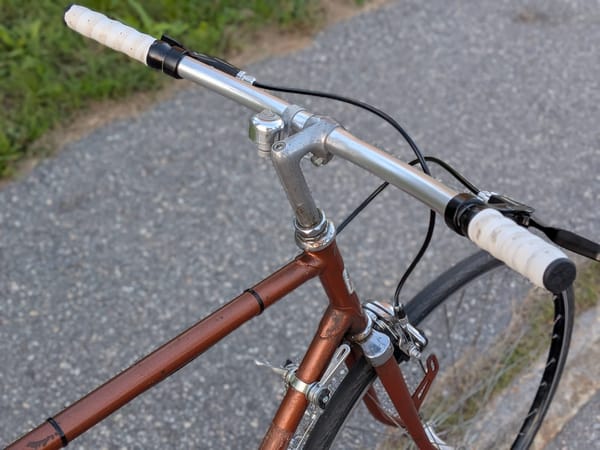
The Athenians kept the ship of Theseus in the harbour as a monument. As the timbers rotted, they replaced them one plank at a time, until eventually not a single original board remained. And so the philosophers started arguing — is it still the ship of Theseus? And if you'd saved every old plank and reassembled them into a second ship, which of the two is the real one?
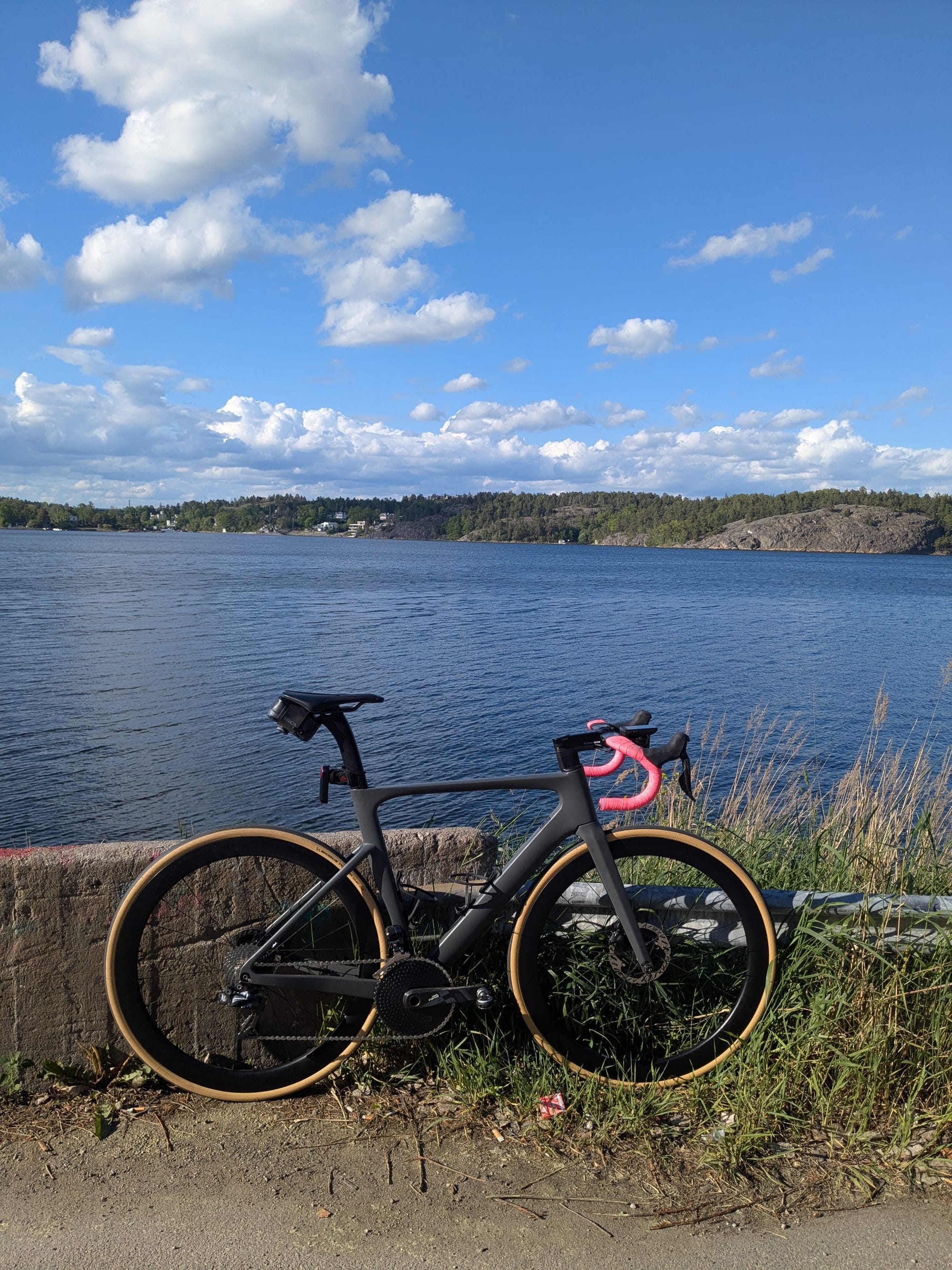
I did not set out to build a philosophy problem. I set out to ride a triathlon. But somewhere between a rattle-can of orange paint in a Stockholm apartment and a set of crash-damaged Dura-Ace shifters I soldered back to life four years later, my road bike quietly turned into that exact thought experiment. Every component has been swapped. The frame itself has been swapped. And I still point at it and call it my road bike, the way you'd nod at an old friend across a room.
This is how that happened.
Landfall
I moved to Sweden in 2018 and did the sensible thing first: I bought a commuter bike. It was great. It also reminded me how much I'd missed riding, and by the summer of 2019 I'd talked myself into signing up for my first-ever triathlon, scheduled for 2020.
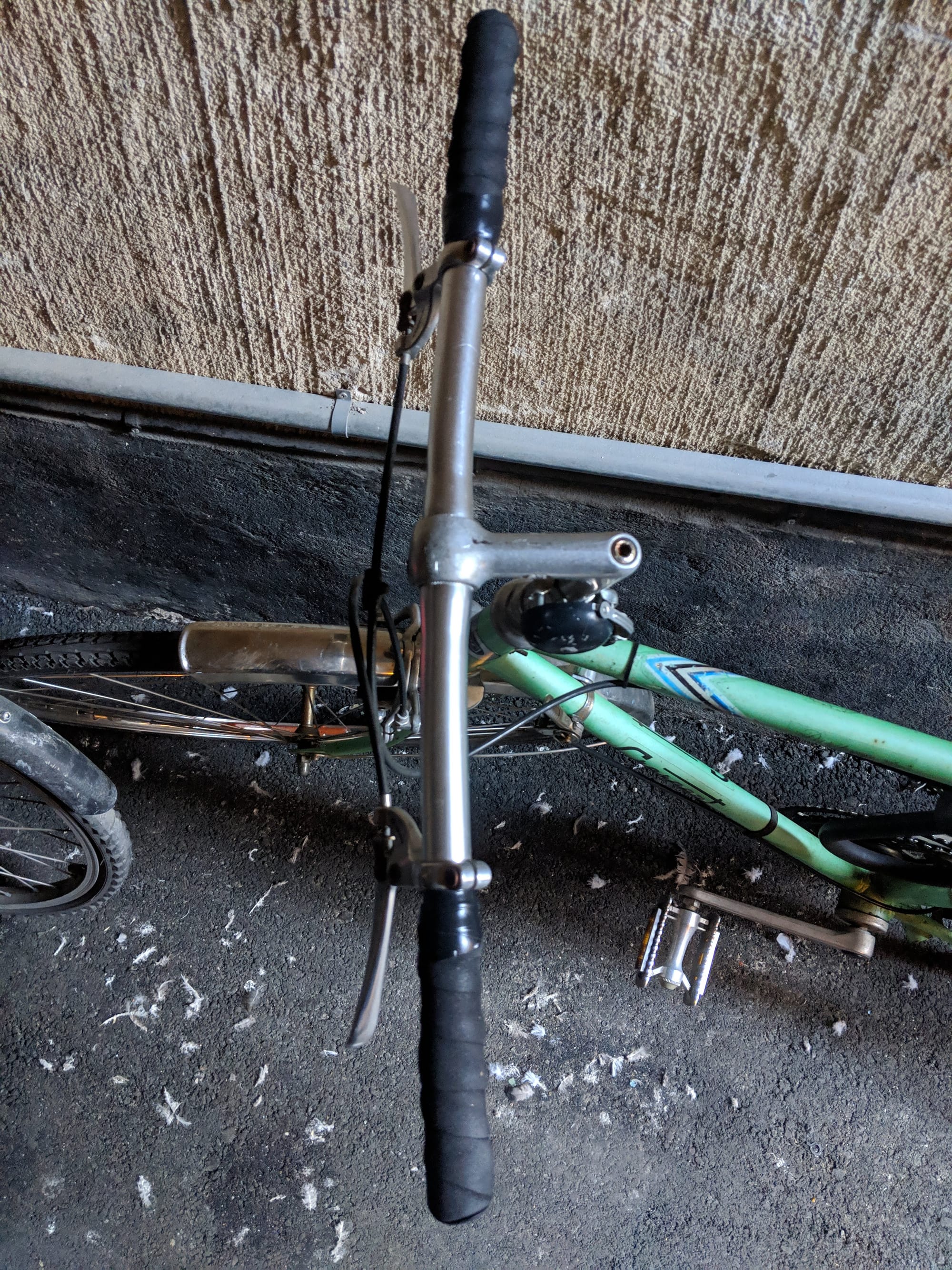
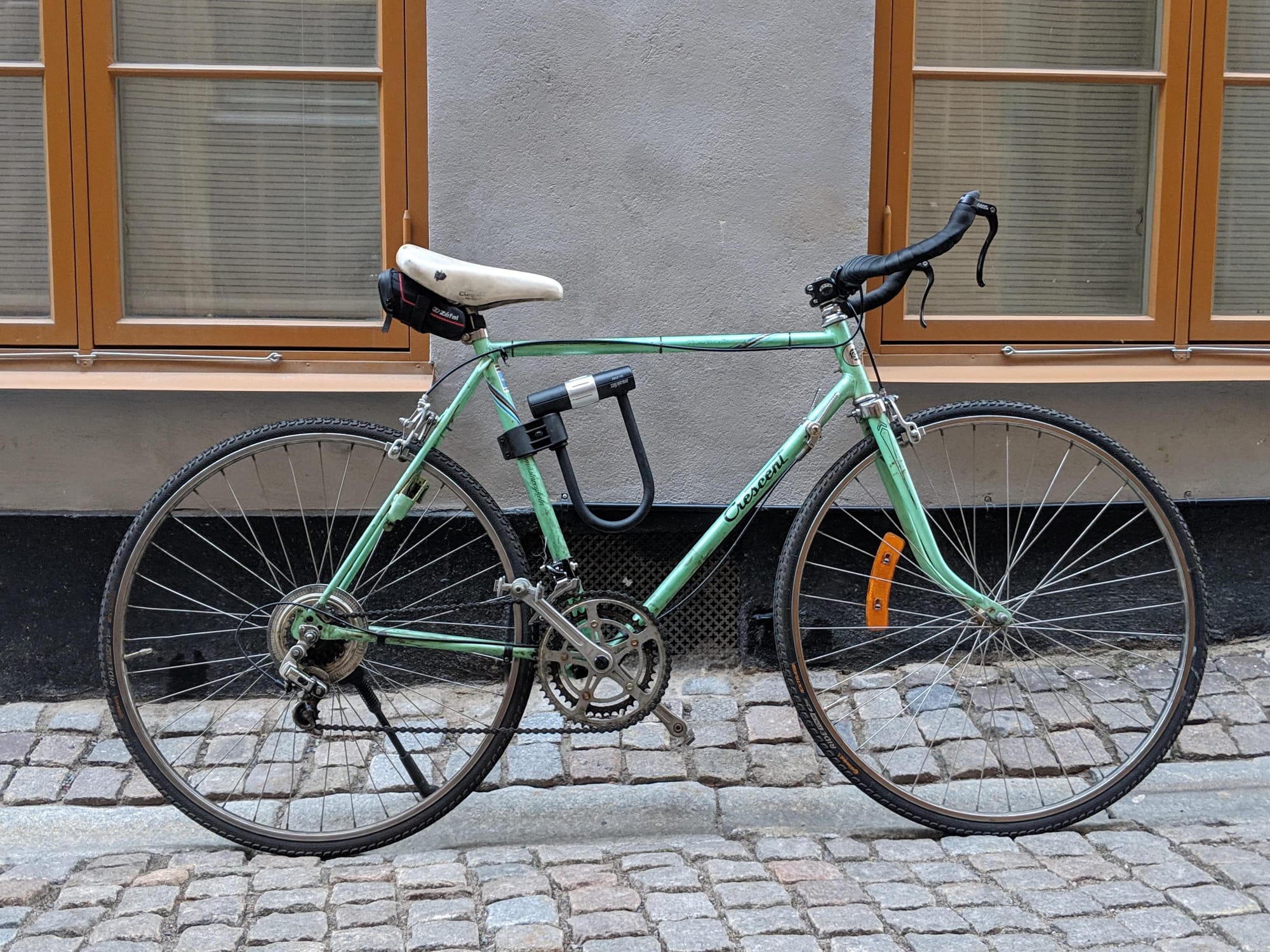
We all know how 2020 went.
But the race gave me an excuse to fall down a rabbit hole, and I fell hard — forums, geometry charts, the whole thing, learning how a bike actually works from the frame out. I wasn't sure road cycling would stick, so I didn't want to spend real money on it. What I did have was a past life building golf equipment, which meant I knew two useful things: how white-label manufacturing works behind a lot of "premium" brands, and how to handle carbon fibre without being frightened of it. So I reached out to a few manufacturers, got some quotes, and — with the particular confidence of a man who has never done a thing but has done something adjacent to it — decided I'd just build the bike myself.
And paint it myself. Obviously.
The first hull
I found a frame I liked that didn't cost much. It was a disc-brake frame, which I bought knowing essentially nothing about disc brakes, a gap in my knowledge I'd discover in increasingly expensive ways over the following months.
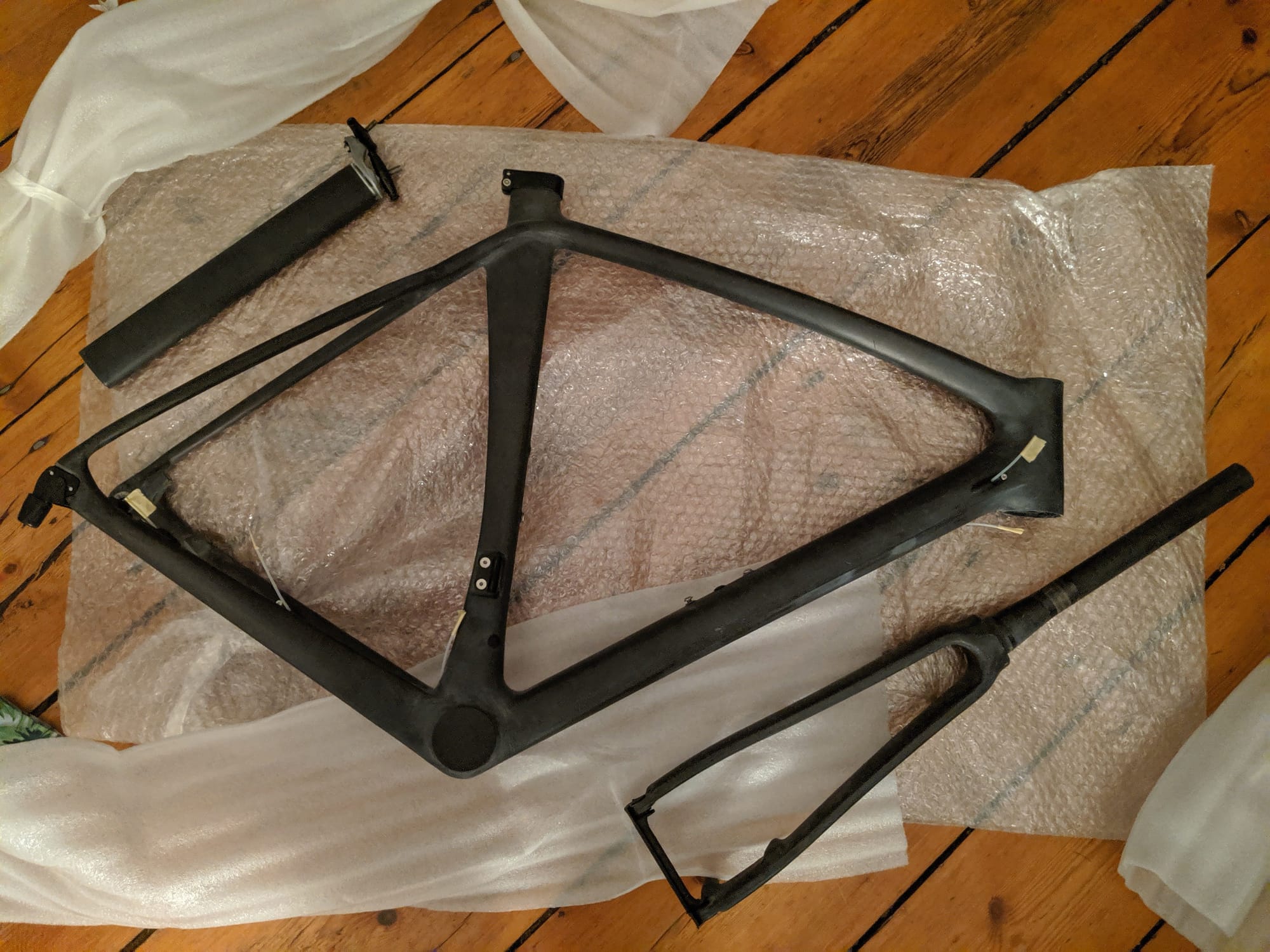
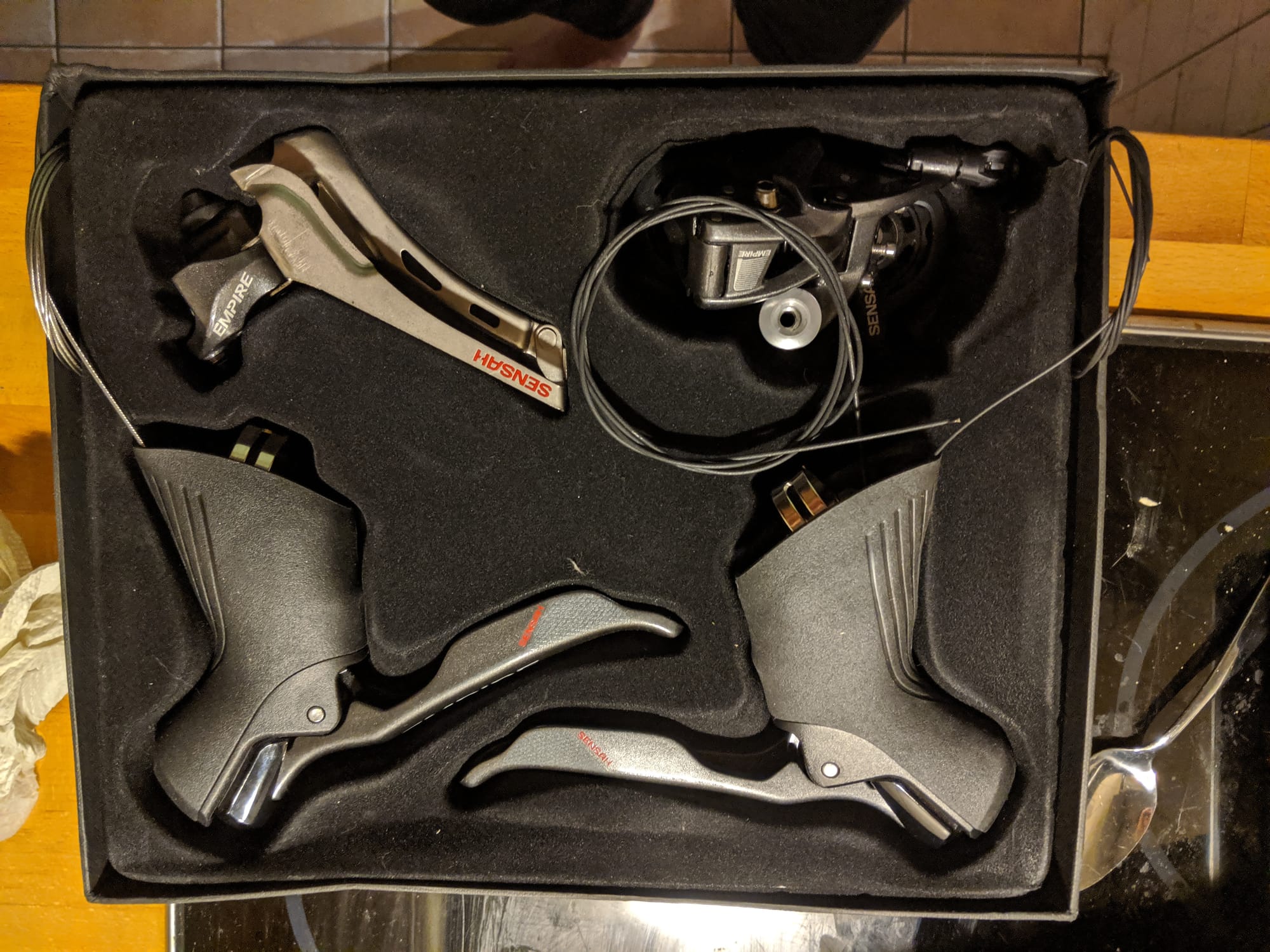
While it shipped, the manufacturer sent over all the specs and sizing, and I took that list to Blocket — Sweden's Craigslist — with no earthly idea what anything was worth. I just wanted everything as cheap as possible. The frame landed in September, which put me perfectly in the path of Black Friday, and I started assembling a bike out of bargains: a Sensah groupset from AliExpress, a secondhand crank I found on eBay while we were away in Barcelona, a bottom bracket to match, a used cassette off Blocket.
The disc brakes taught me my first real lesson. I confidently ordered a set, discovered they wouldn't mount to my frame, and only then learned there is a difference between flat mount and post mount — knowledge that arrived one return shipment too late. I sent them back, got the post-mount version, and — still not ready to face hydraulics — went down another rabbit hole and landed on a set of cable-actuated Juin Tech brakes, which turned out to be a genuinely strong place to start.
Icarus, in orange
Then I painted it.
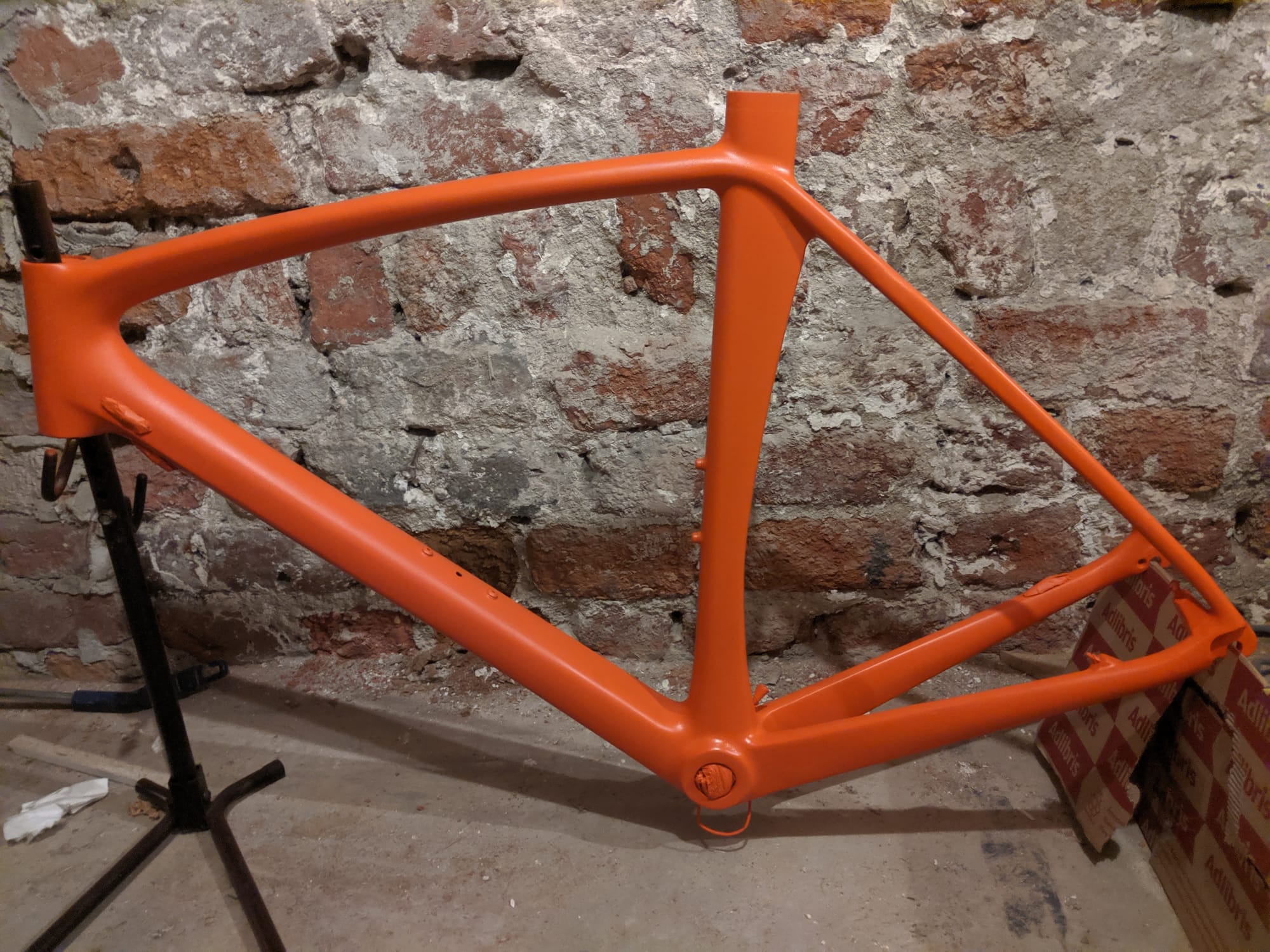
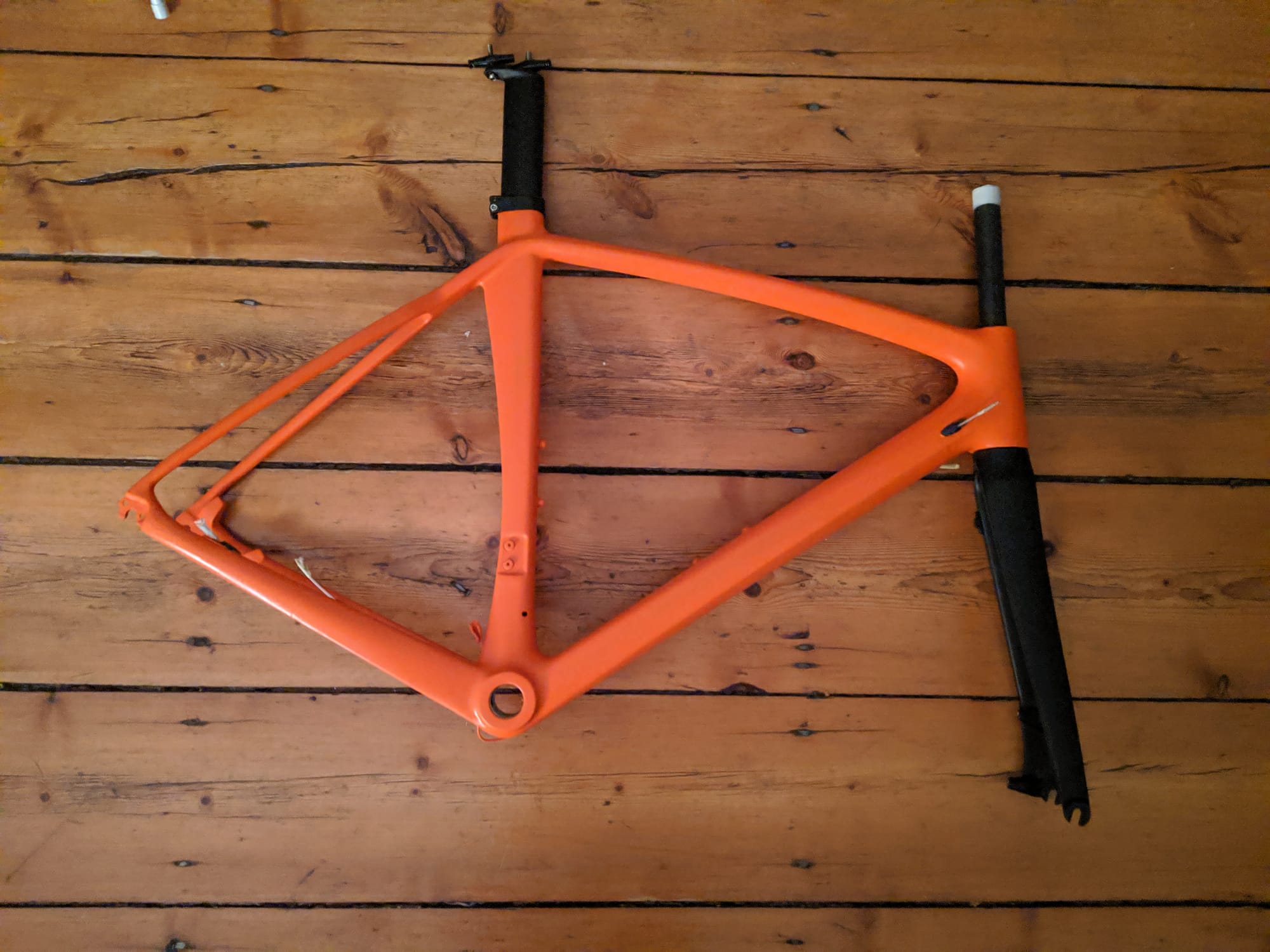
The vision was an old Specialized Allez I'd fallen for — an orange pearl finish over a black fork. I told myself I could recreate it. With Spray.bike rattle cans. In my apartment. I could not, entirely, but I got surprisingly close: orange body, a dusting of gold flake, all my best effort.
What I didn't know was that I needed to clear coat it. I assumed the flake was the clear coat, so I skimped on the coats that actually seal everything in — and as I was building the bike up, the paint began quietly flaking off the frame in my hands. My first real taste of difficulty.
And yet. It was built. Every part on it was a part I'd chosen and fitted myself, and I was proud of the peeling, imperfect thing.
Learning the ropes
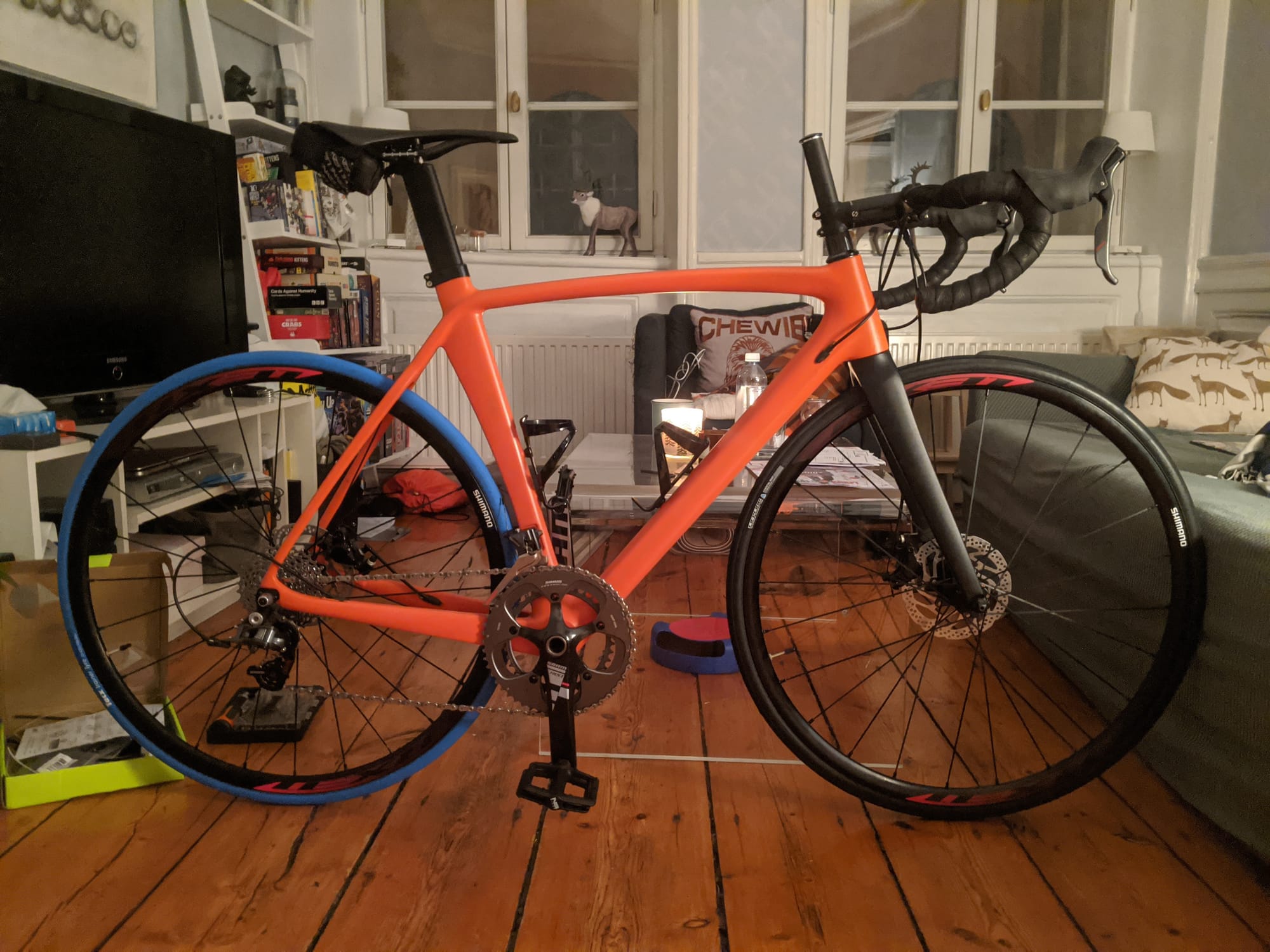
The build took me two days, mostly because I didn't yet know how to index gears and couldn't get it to shift cleanly on the trainer. The bars were set at some deranged angle, the shifters splayed outward like they were trying to escape. But I knew that bike, screw by screw. I'd learned to diagnose it myself. And I'd found the thing I actually loved, which wasn't just the riding — it was the tinkering.
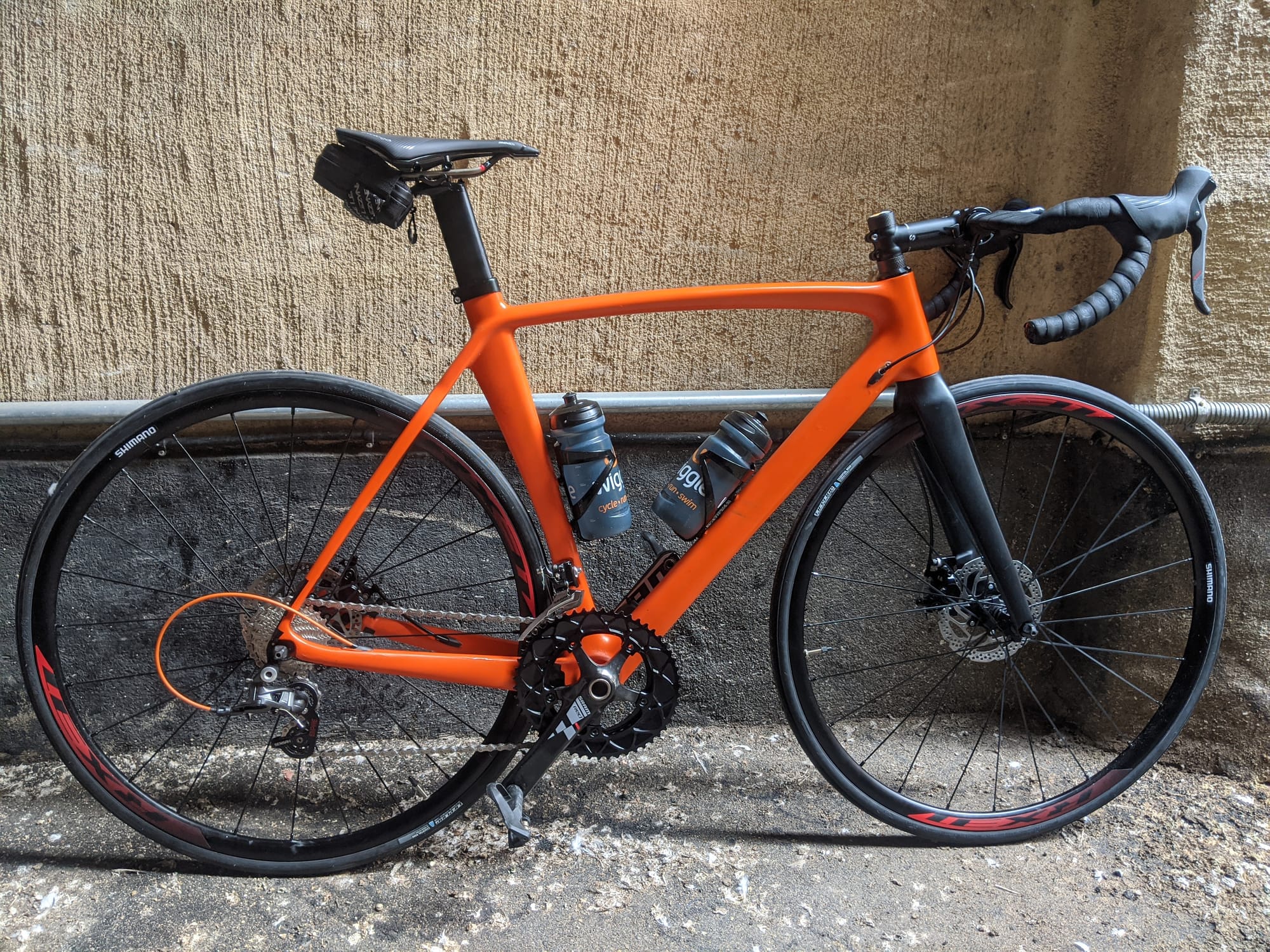
I rode the orange bike for a season, indoors at first. My longest ride at the start was 25 kilometres. By June 2020 I'd done my first fifty, then sixty, and then I was doing them regularly. The paint kept flaking. I didn't care.
Down to the carbon
By that autumn, two things were true: the orange was coming off in earnest, and I'd grown fussier. I didn't like the cable clutter at the front, so I decided to change the bars and reroute everything. And I'd gotten sharper at hunting for parts — sharp enough that when a set of Shimano Ultegra hydraulic shifters appeared on Facebook Marketplace for around 1,700 kronor (no calipers), I knew exactly what I was looking at and jumped. If I was pulling the bike apart anyway, I might as well repaint it properly this time.
So I did the thing you're supposed to do. I watched everything — including a German painter on YouTube who'd built his whole method around rattle cans — and I sanded the frame back down to bare carbon. The mistake I'd made the first time was skipping primer, so this time I laid down a proper carbon primer, then a clean grey body, with a pink-to-orange fade tucked inside the fork and the last of that gold flake for old times' sake. Three or four days of patient coats. We were in lockdown; a slow, careful project was exactly the right shape of thing to have.
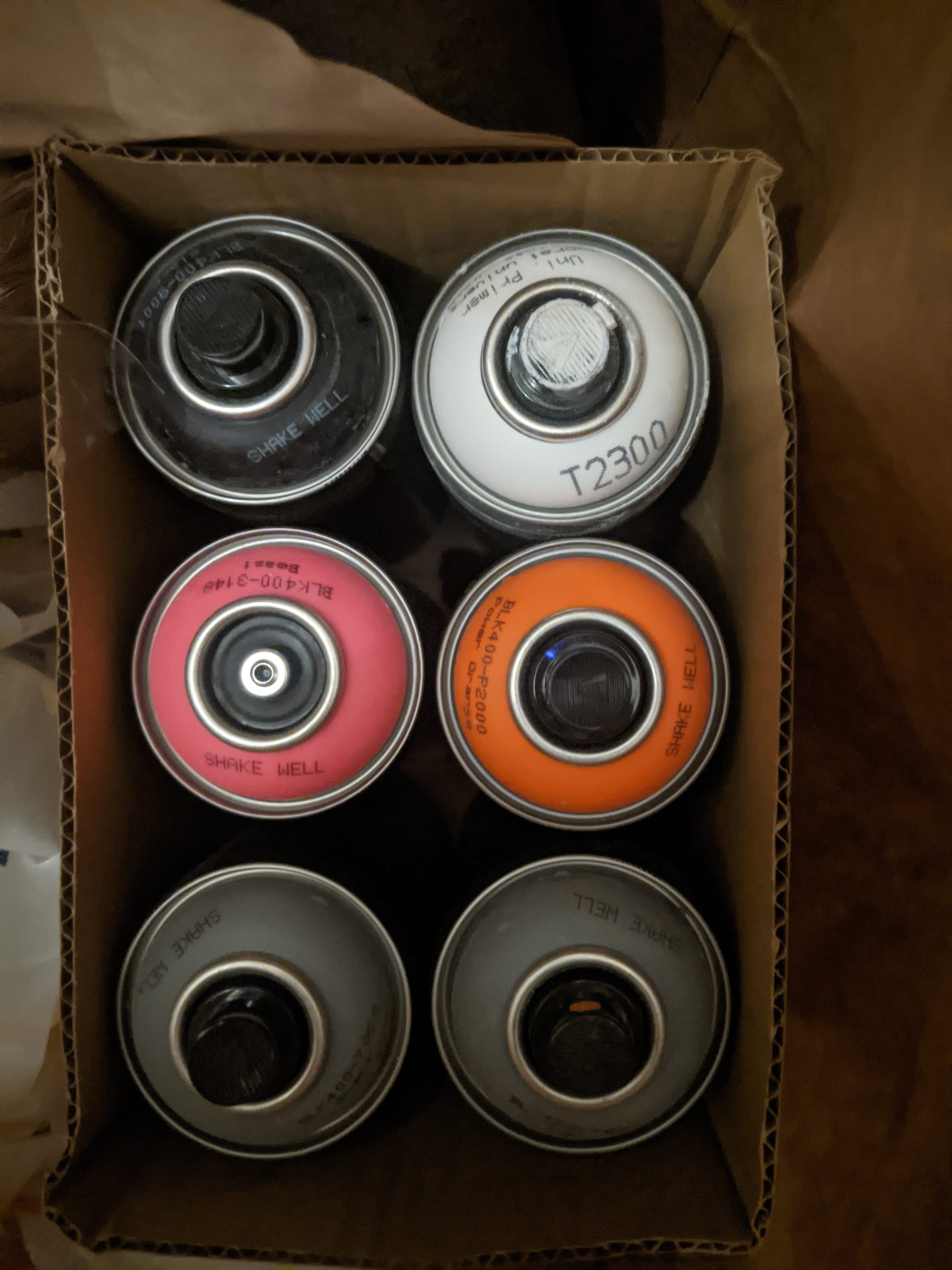
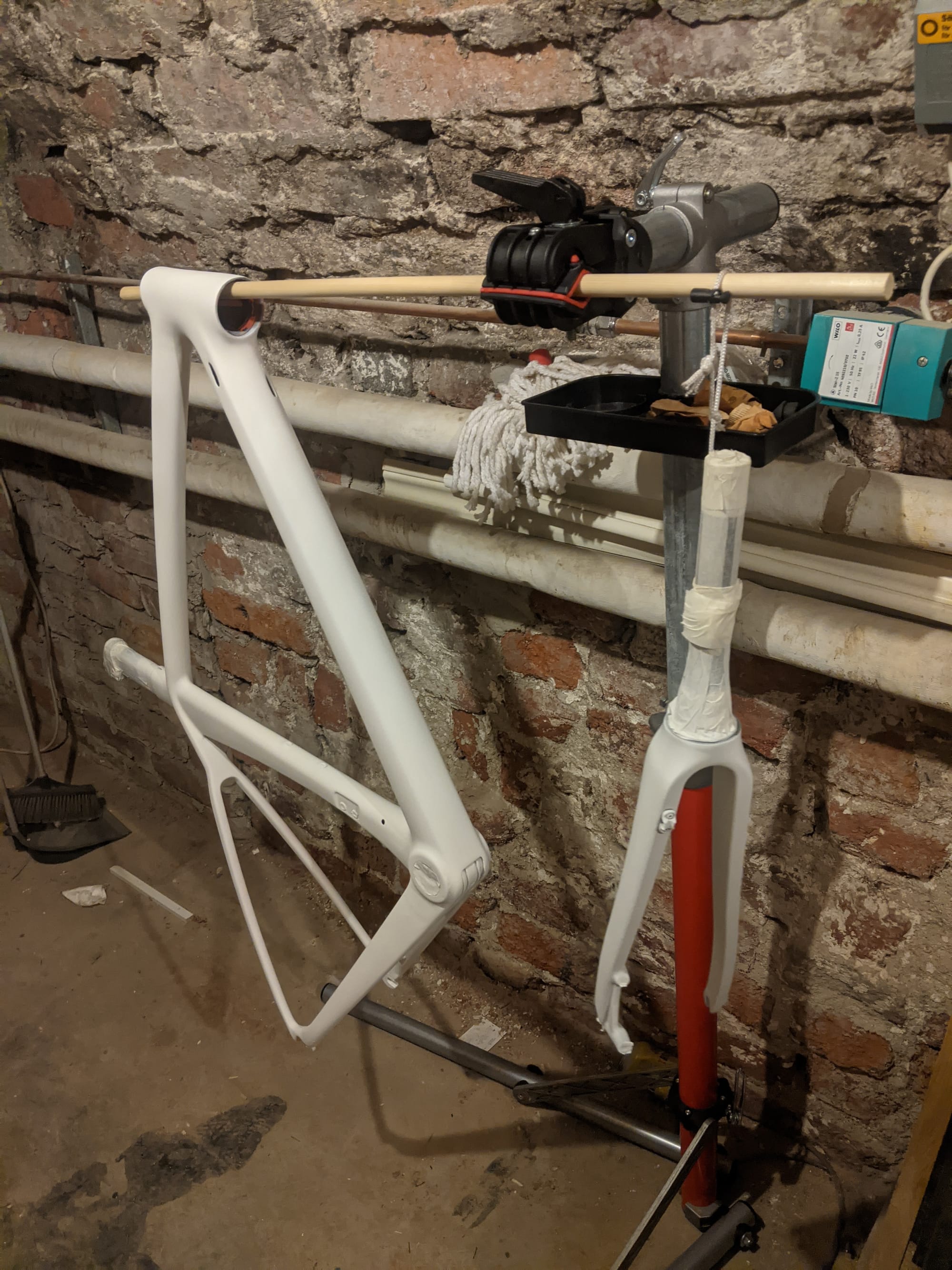
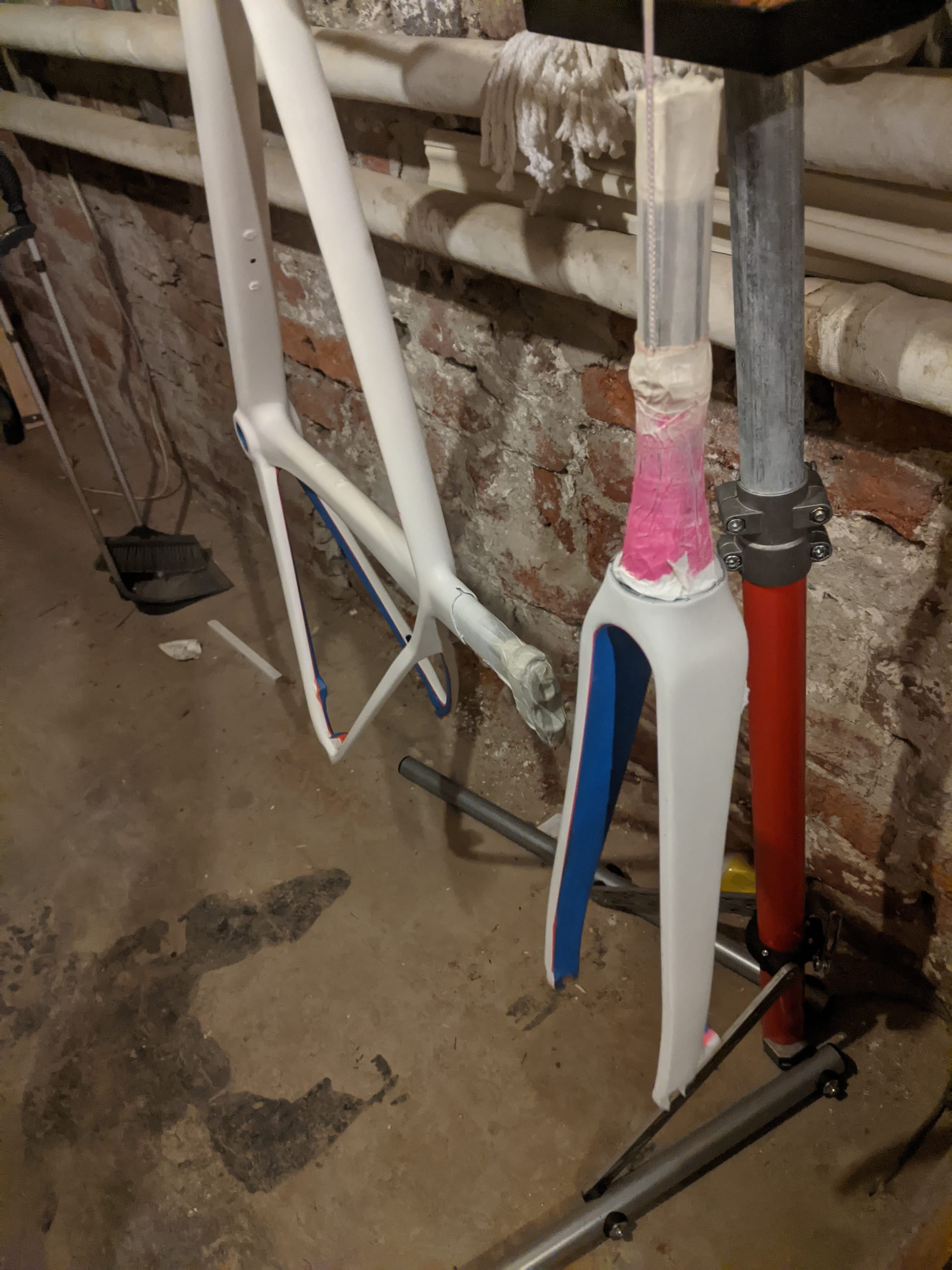
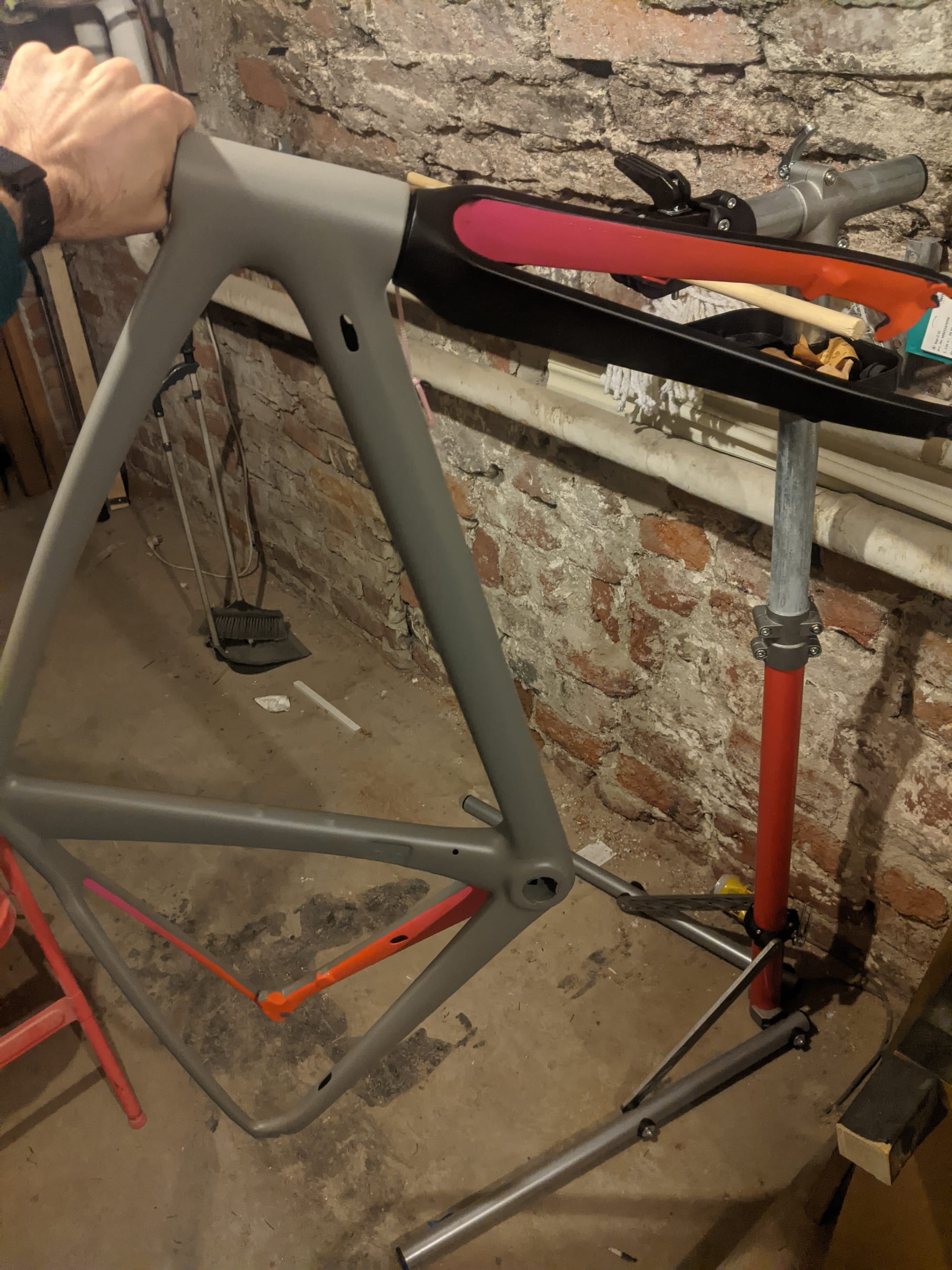
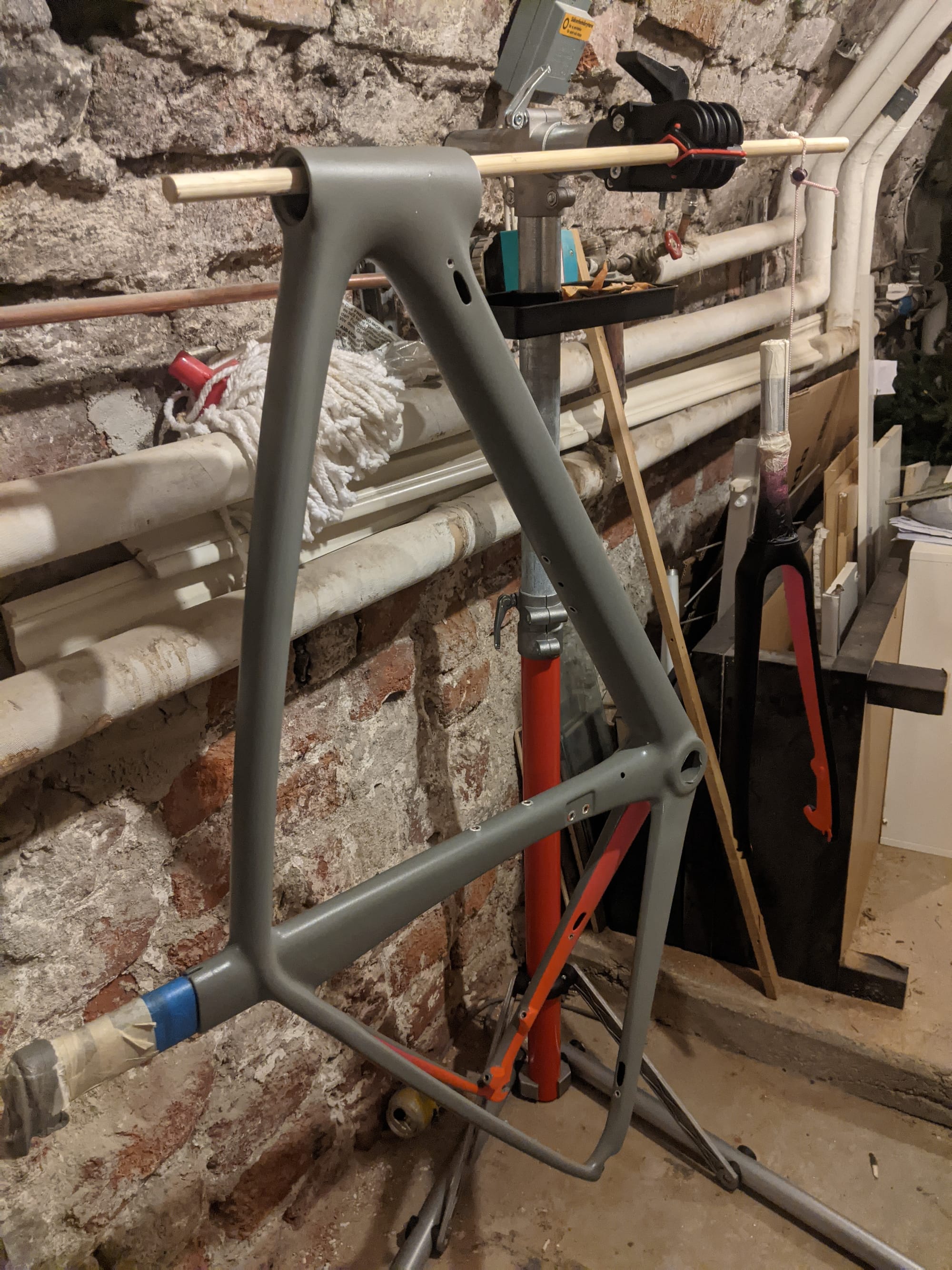
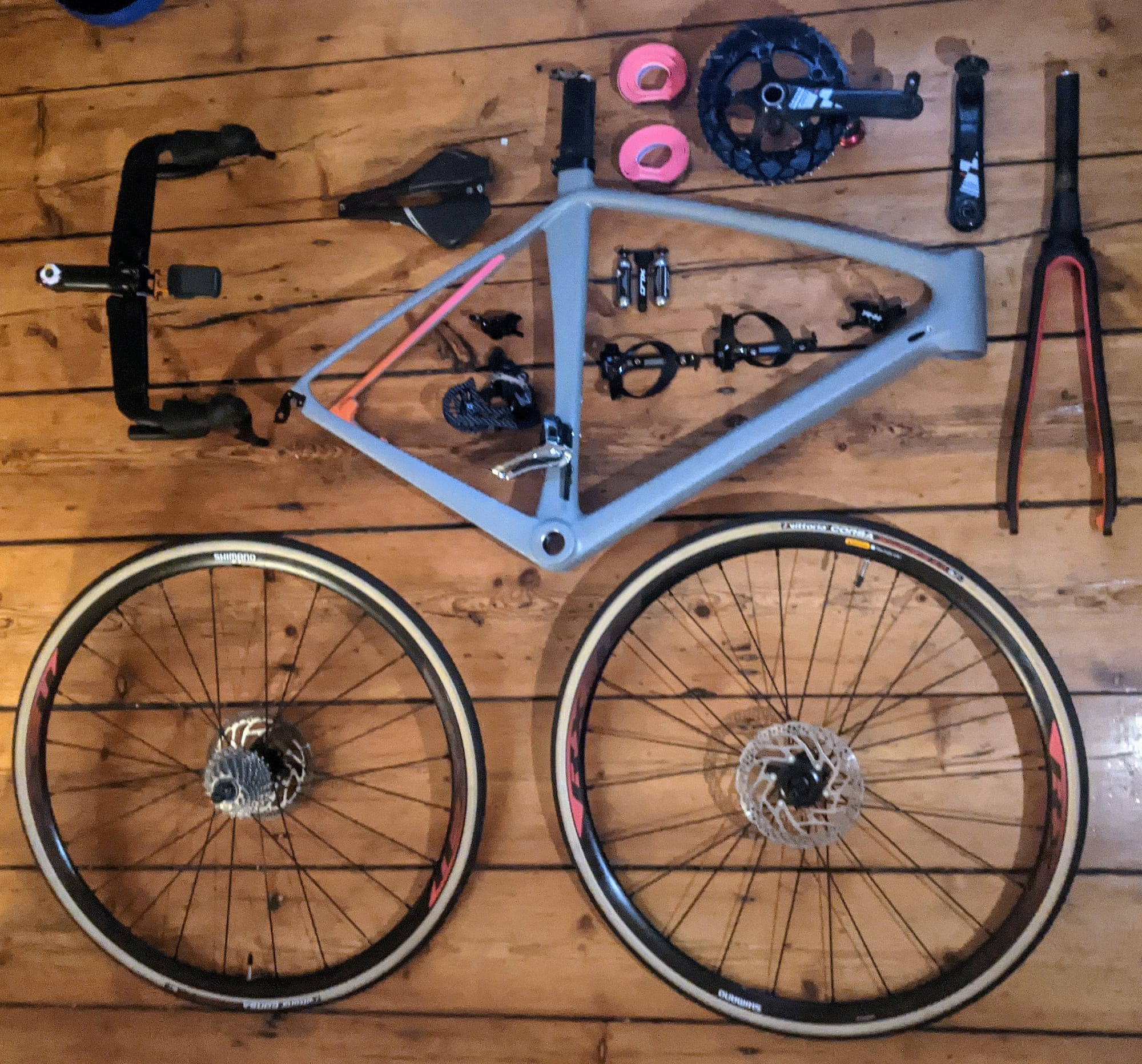
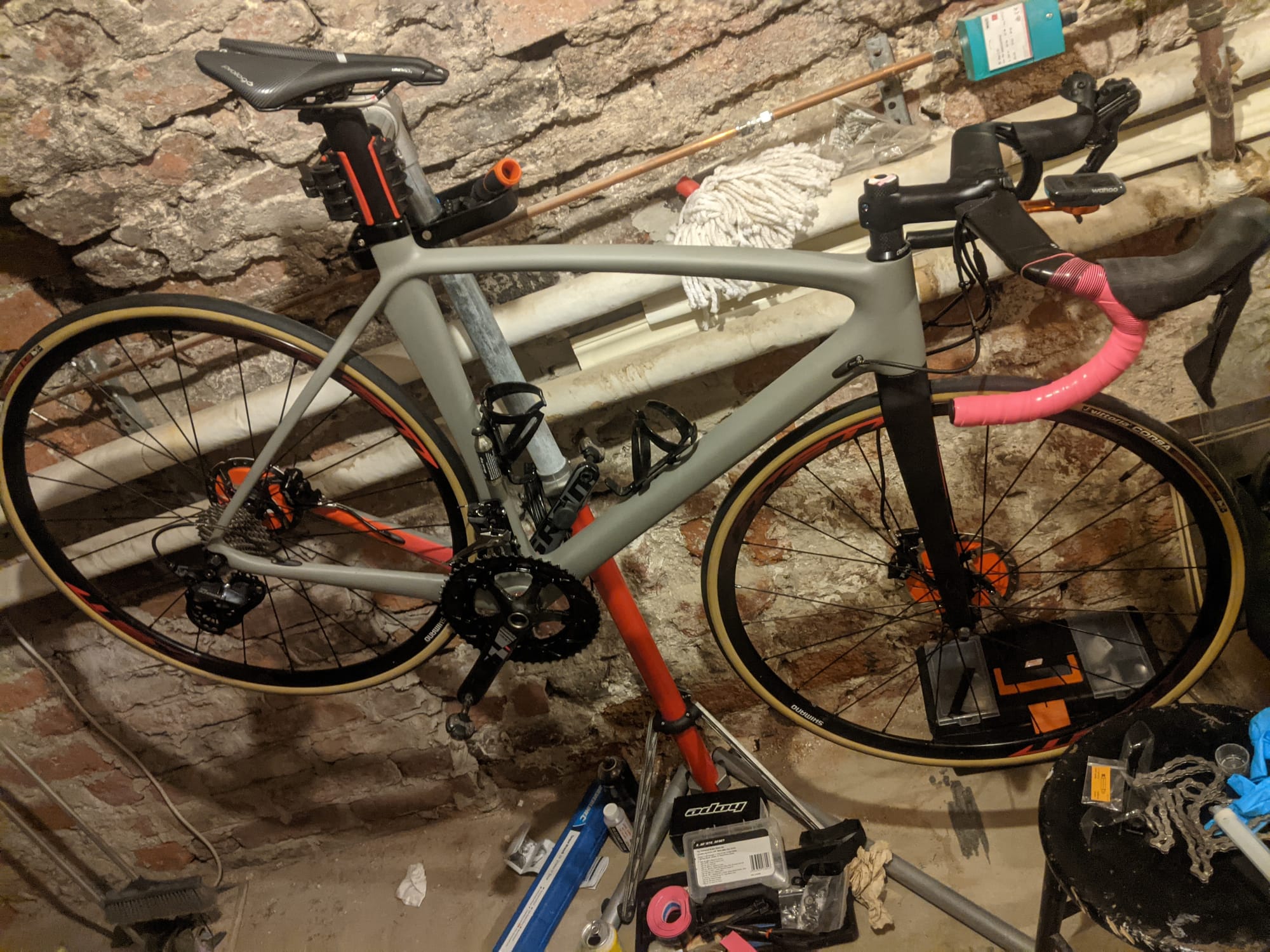
This was the real turning point — the moment the bike left AliExpress behind and started becoming a proper machine. Shimano hydraulics went on, which meant learning to bleed brakes, which meant watching the same video six or seven times, fighting air bubbles, and swearing at a set of Hope Tech calipers I'd had to source because mine came without any. But eventually the lever felt right under my fingers, and I'd earned a new skill.
Deeper water
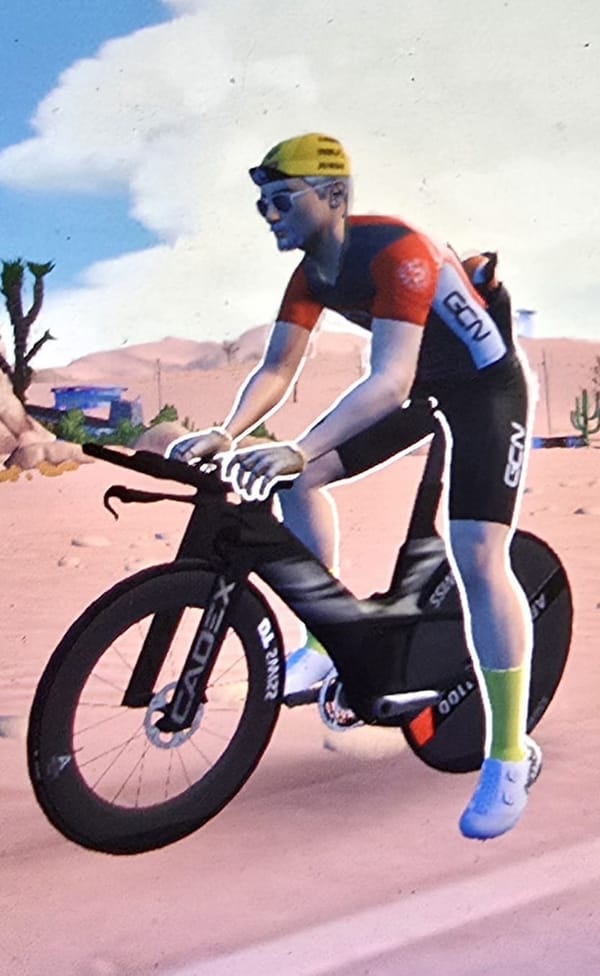
Reassembly took another half a day I hadn't budgeted for. I rode it through the winter on the trainer, dialling in the fit with Zwift, and by spring I'd found a manufacturer building carbon wheels. Off came the shallow aluminium hoops; on went deep-section carbon. I went from butyl tubes to TPU tubes and finally, when the outdoor season opened, taught myself to set up tubeless — one more skill, one more layer of the bike that was no longer the bike I'd started with.
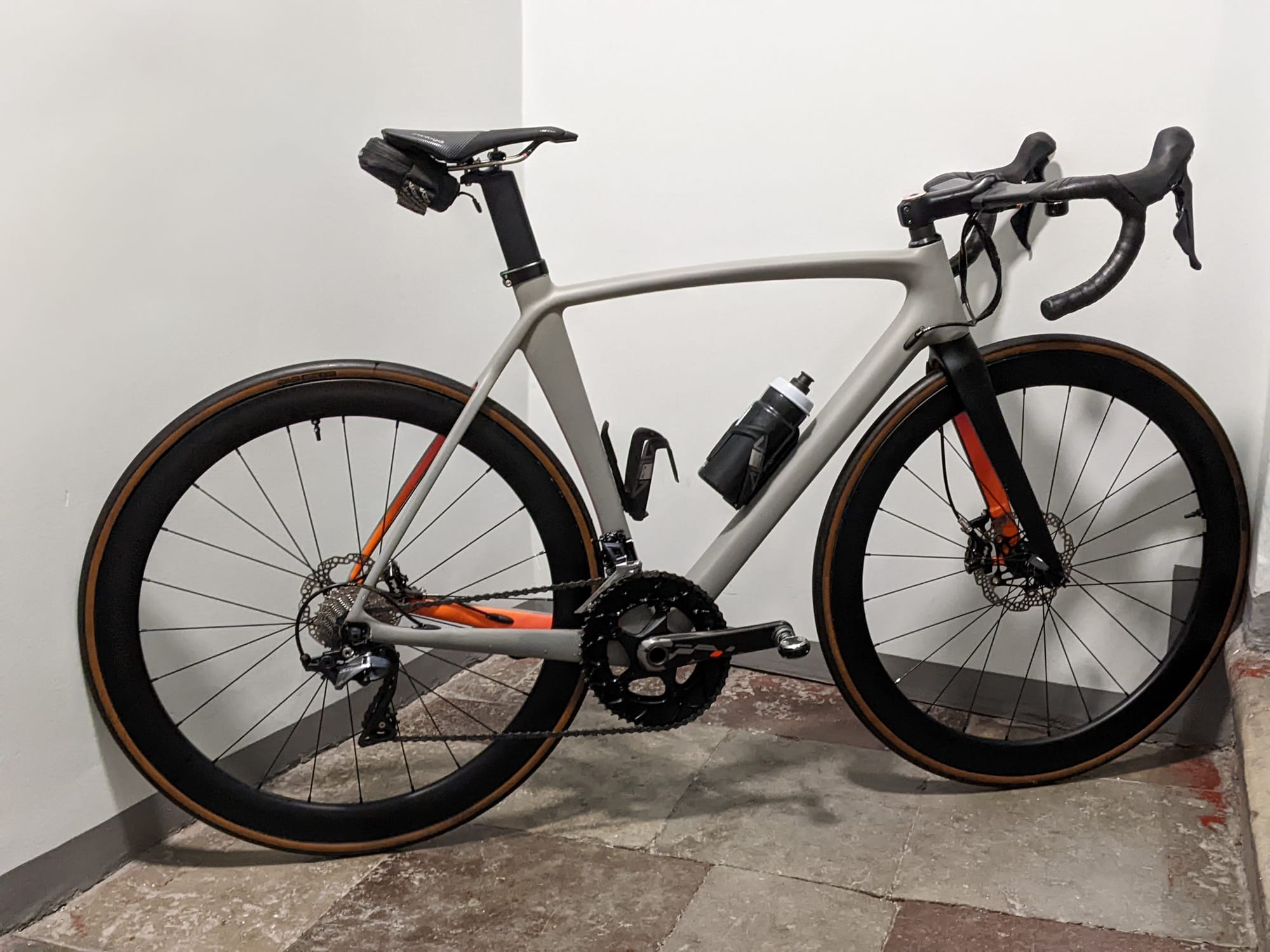
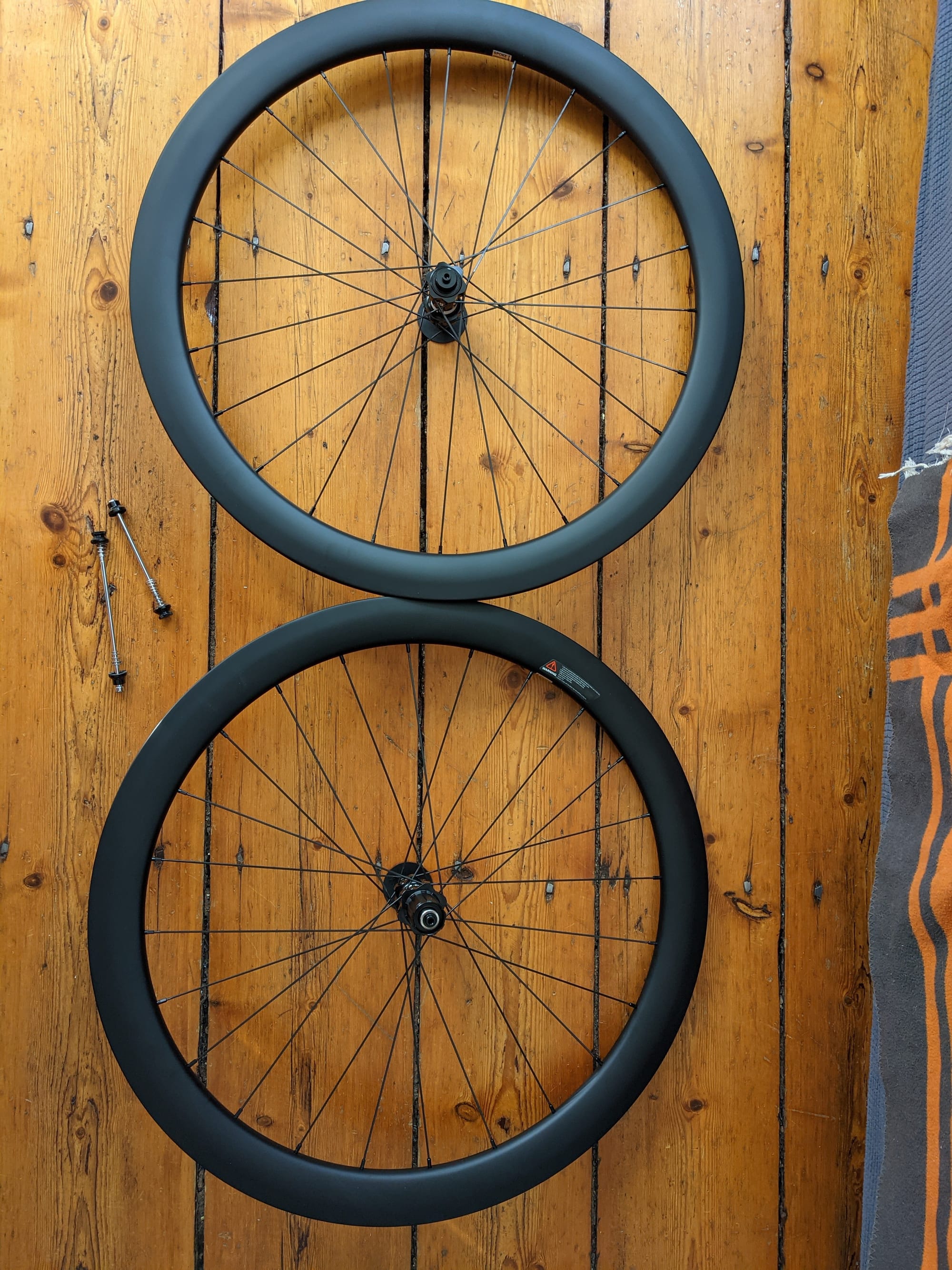
(Around this time my other bike was stolen and became a gravel conversion, but that's a whole other odyssey for another day.)
The two hundred
The triathlon, meanwhile, kept not happening. Cancelled, postponed, cancelled again. By 2022 I was sure it would finally go ahead — I was training properly for it — and then it fell through once more over road closures and permits. So I took all that fitness and pointed it at the longest ride of my life instead: a 200-kilometre epic, just to see how far the bike and I could go.
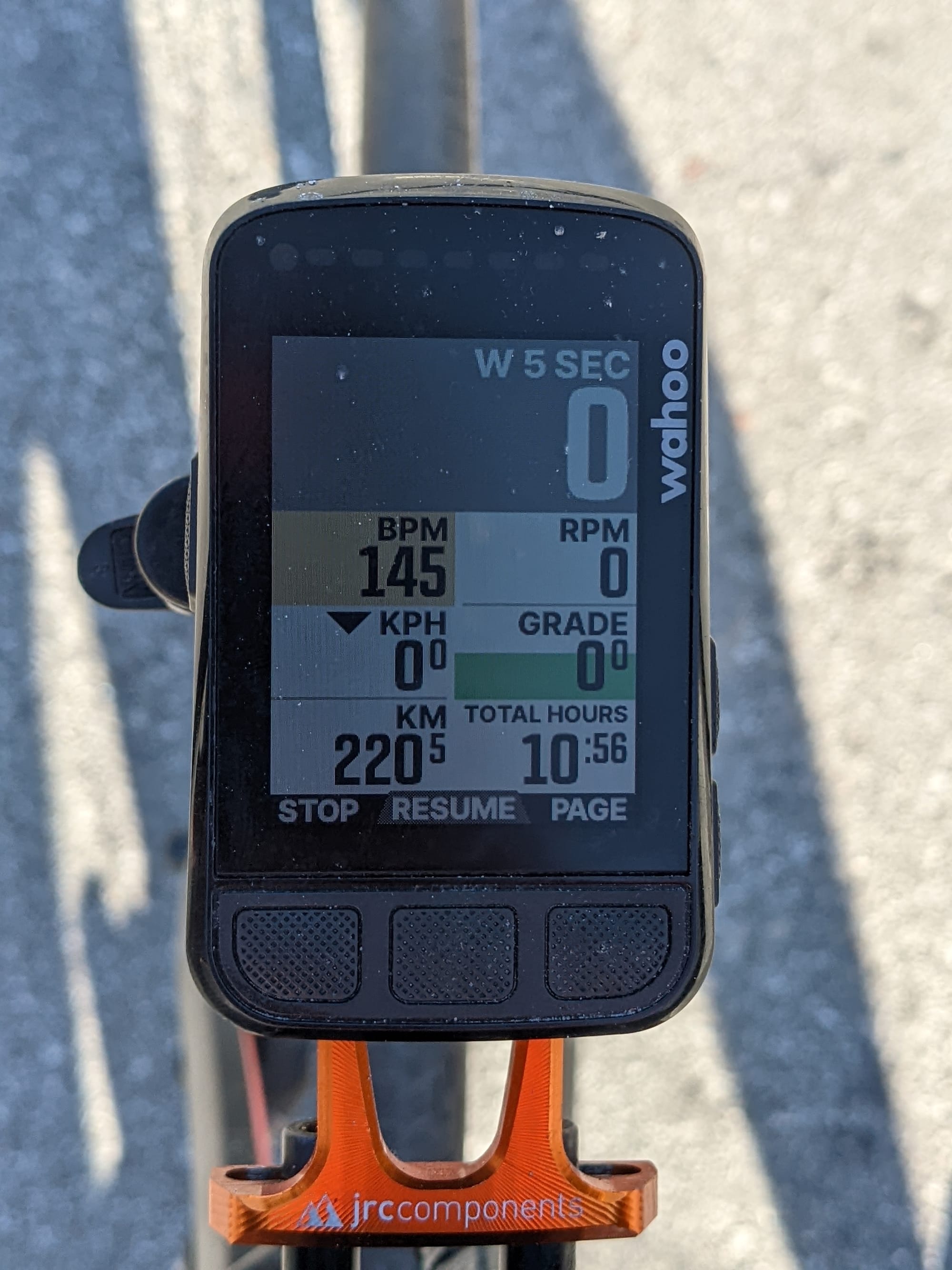
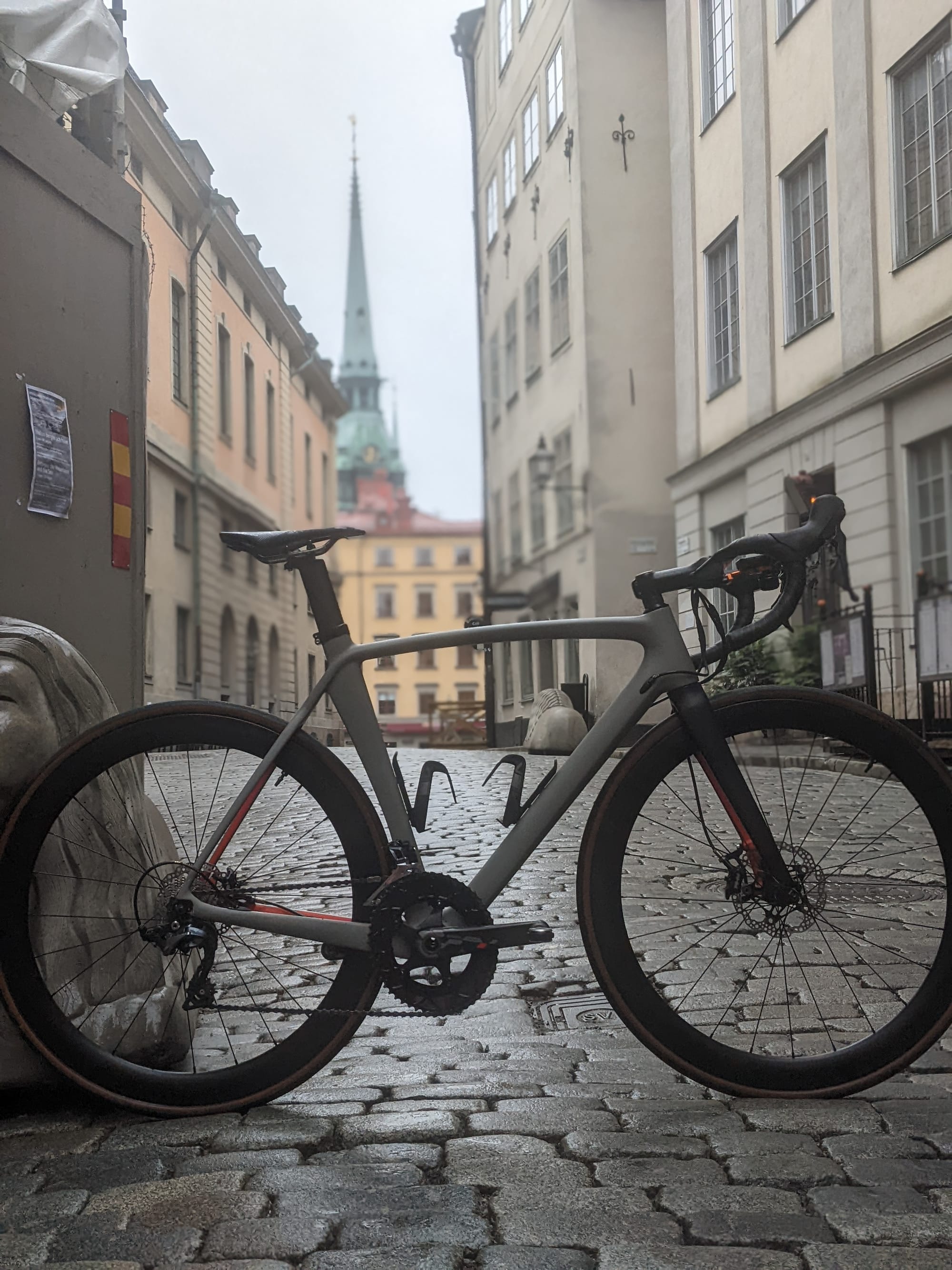
By then I'd swapped the spider-based power meter for power-meter pedals, so that when I travelled I could bring the pedals and keep my numbers consistent even on a strange bike. Small change. Very on-brand for where this was all heading.
The 200 left me sore in instructive places. I wanted to do more long rides — regular hundreds, maybe ultras — and I wanted something faster and more comfortable underneath me. The frame had one hard limit: it would only take 25mm tyres, and I wanted room for 28s or 30s. So I booked a fit. But instead of bringing the bike in to be adjusted, I went for a sizing session on a rig, from scratch, to find my true numbers — because I already knew, somewhere, that I wasn't adjusting a bike anymore. I was replacing it.
A new hull
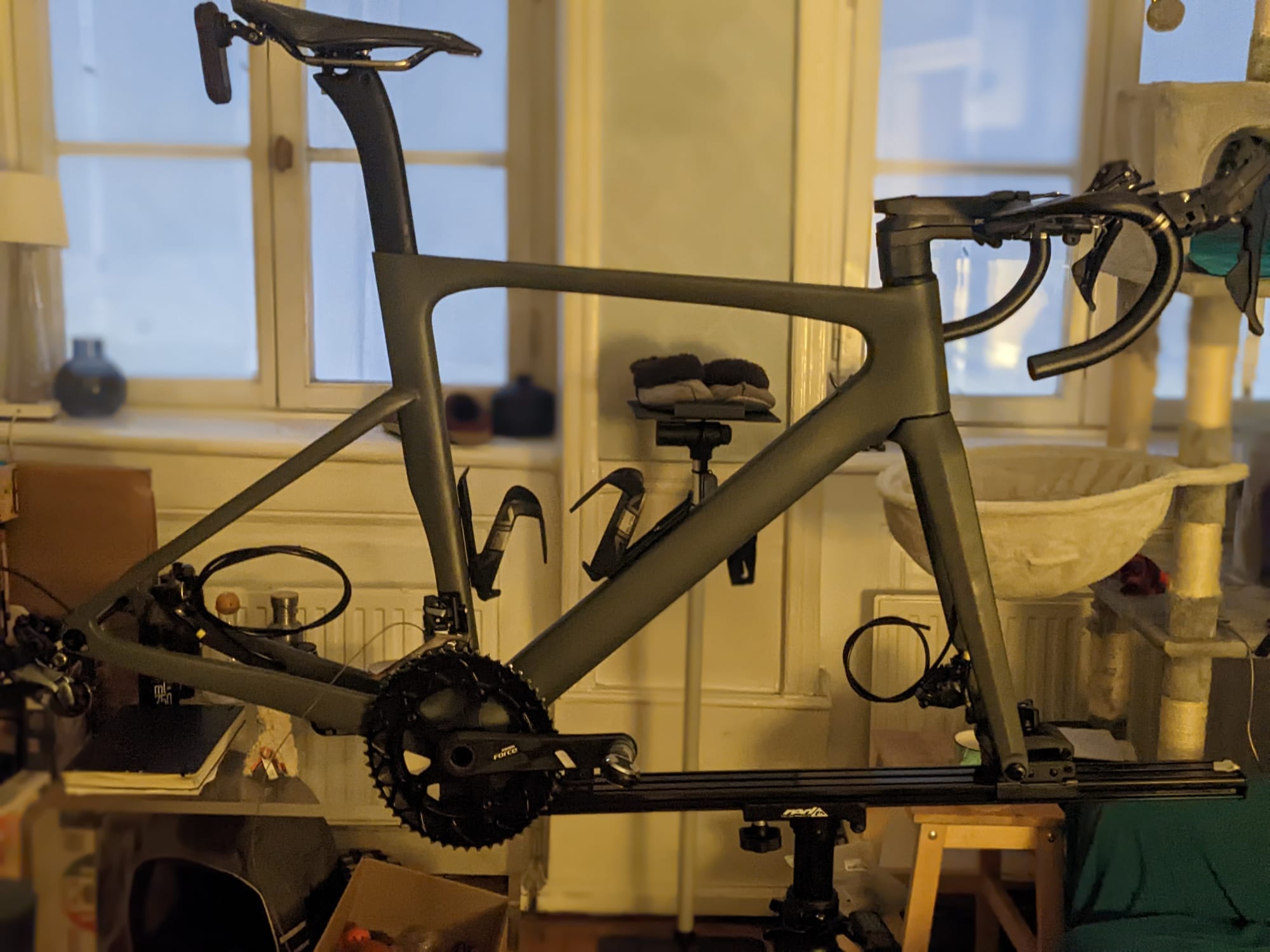
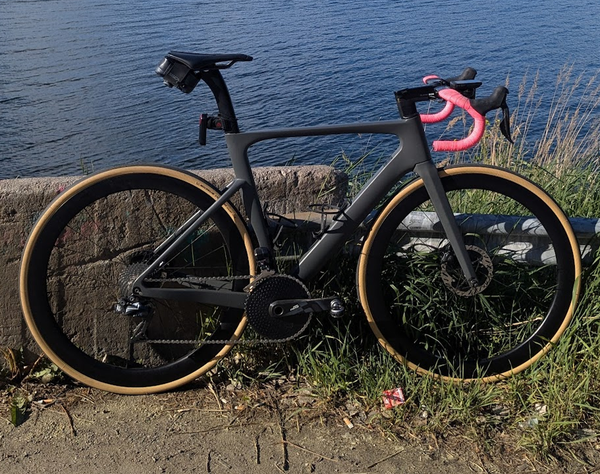
The fit narrowed it to two frames: an aero bike I loved the look of, and an endurance frame. My stack and reach pointed at the aero one, so that's the frame I've ridden ever since.
Almost everything migrated across. I'd bought a new, shorter crankset ahead of the frame — the fit moved me off the 172.5mm cranks I'd assumed were just "standard" — but I kept it in the family and simply carried over the spider and chainrings. The Ultegra parts bolted straight on. The only casualty was the calipers: the new frame was flat mount, so I sold the post-mount set and finally, satisfyingly, made the whole bike Shimano end to end. The one genuinely new headache was internal routing. I'd never worked with fully integrated cables, and the order of operations was so alien that the build took me two or three days — so I stopped treating it as one job and broke it into small sprints instead, one section at a time.
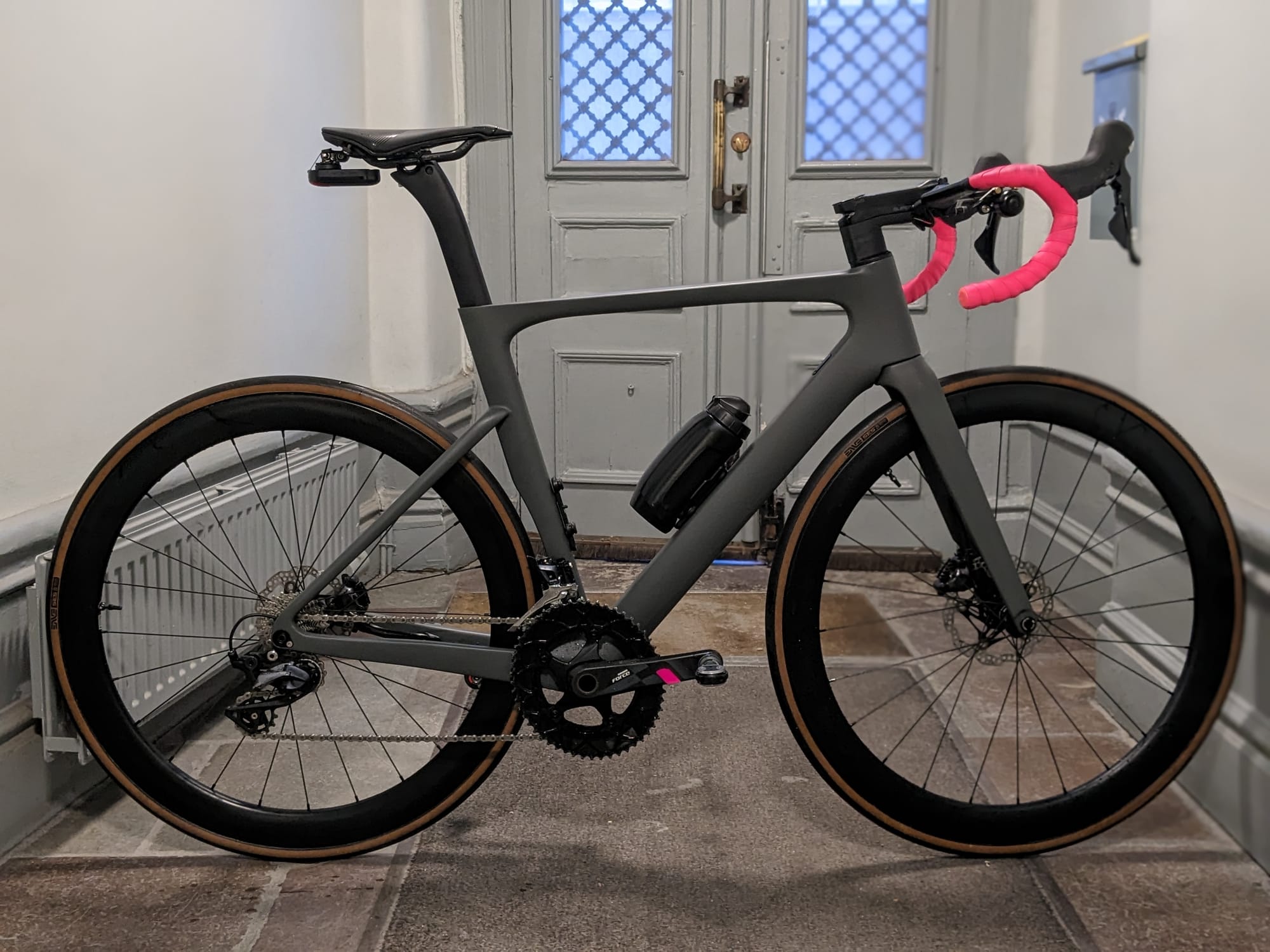
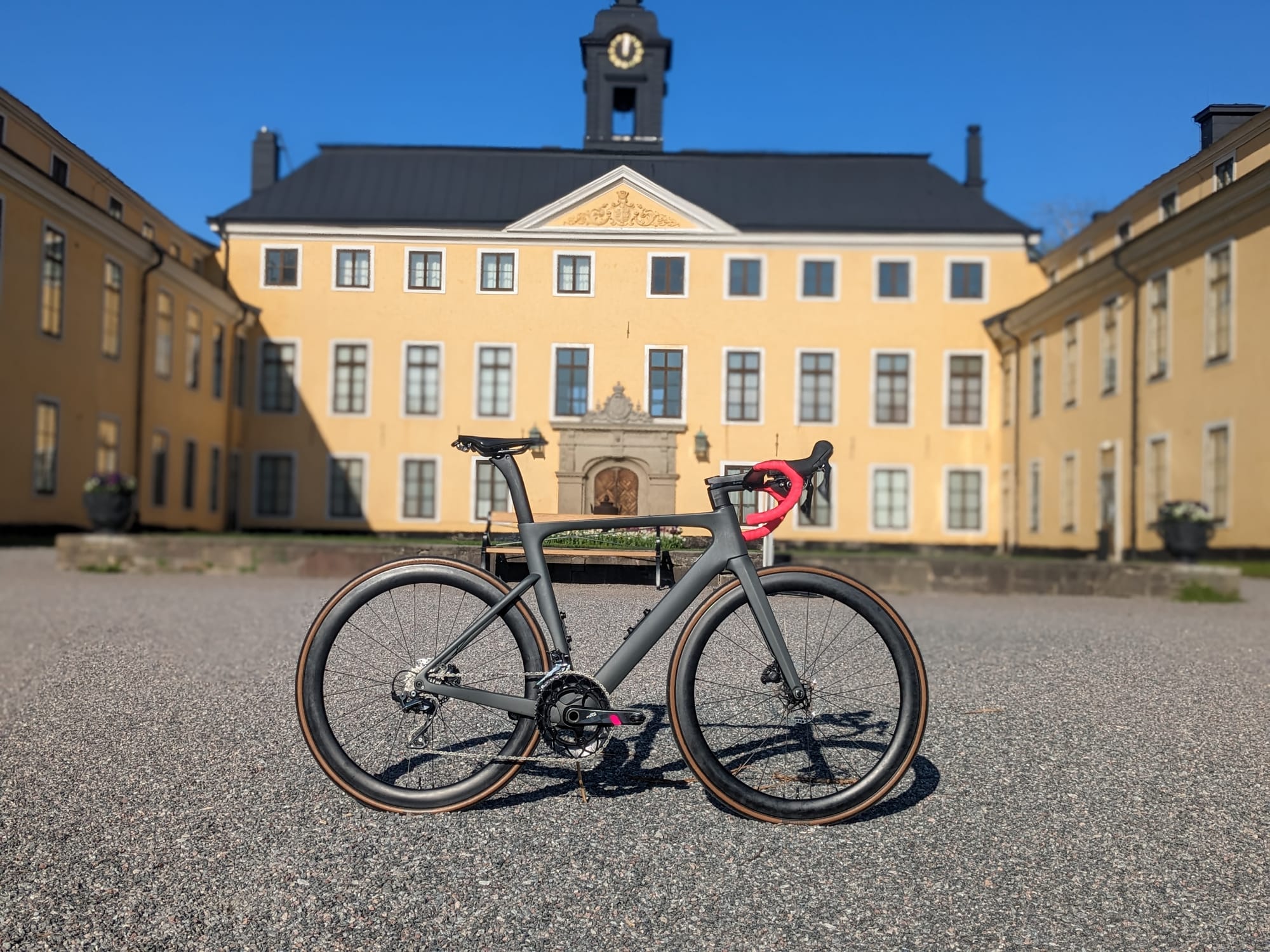
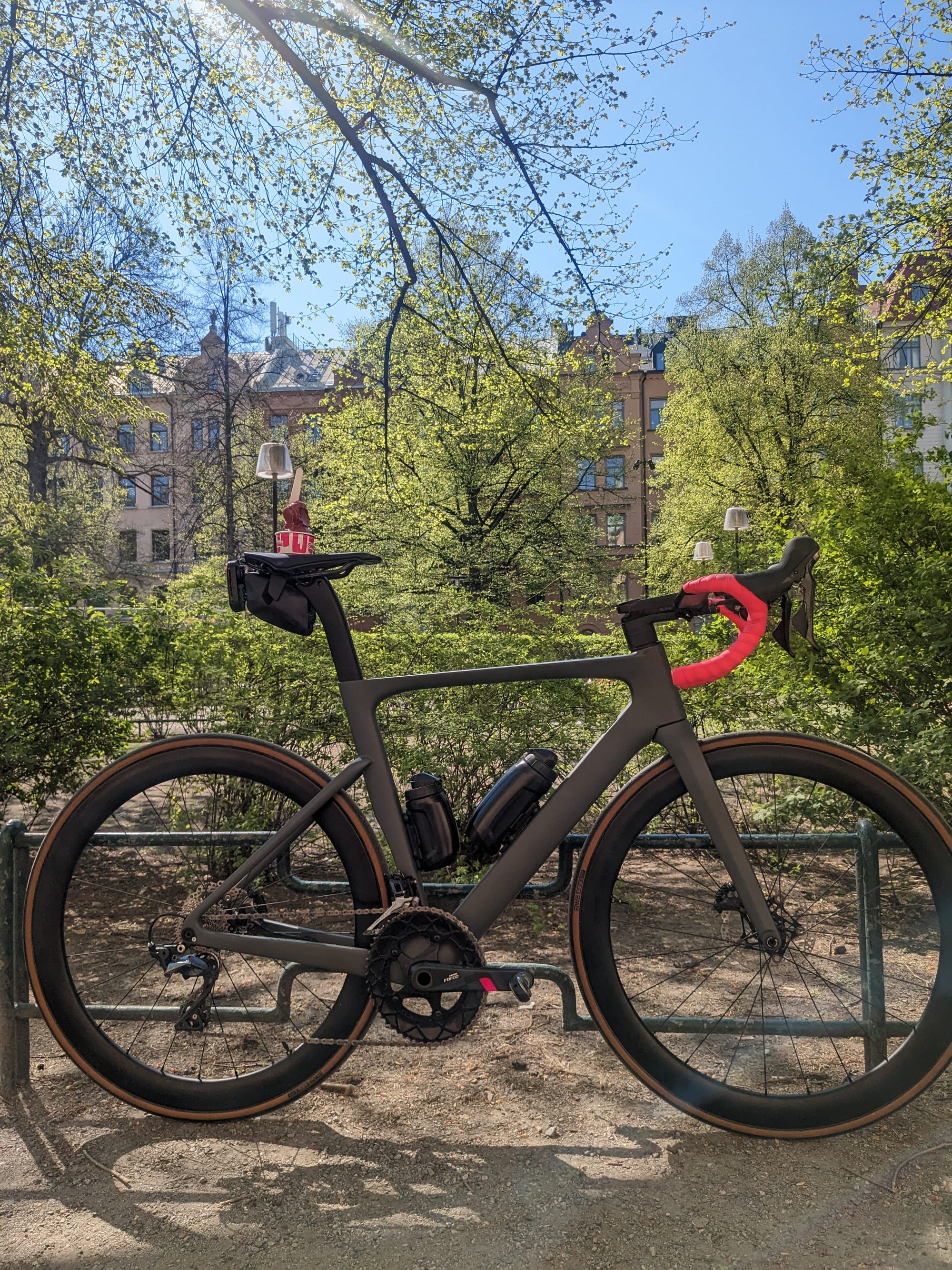
And this time, I did the wisest thing I've ever done to a bike frame: I asked the manufacturer to paint it. After two hand-jobs with rattle cans, I wanted a proper, professional finish — and I'd finally learned enough to know that the most skilled move available to me was to not do it myself.
The wheels, rotors, groupset, bars, saddle, pedals and crank all came across. The bike was rebuilt over a week in November 2022. New hull, old crew.
The ghost in the machine
I rode it mechanical until the following spring, when an FSA WE groupset — electronic, semi-wireless, hydraulic — came up at a price where the math was irresistible: if I hated electronic shifting, I could resell it for what I paid. So I swapped out all the hydraulic lines, went semi-wireless, and rode it that way for over a year.
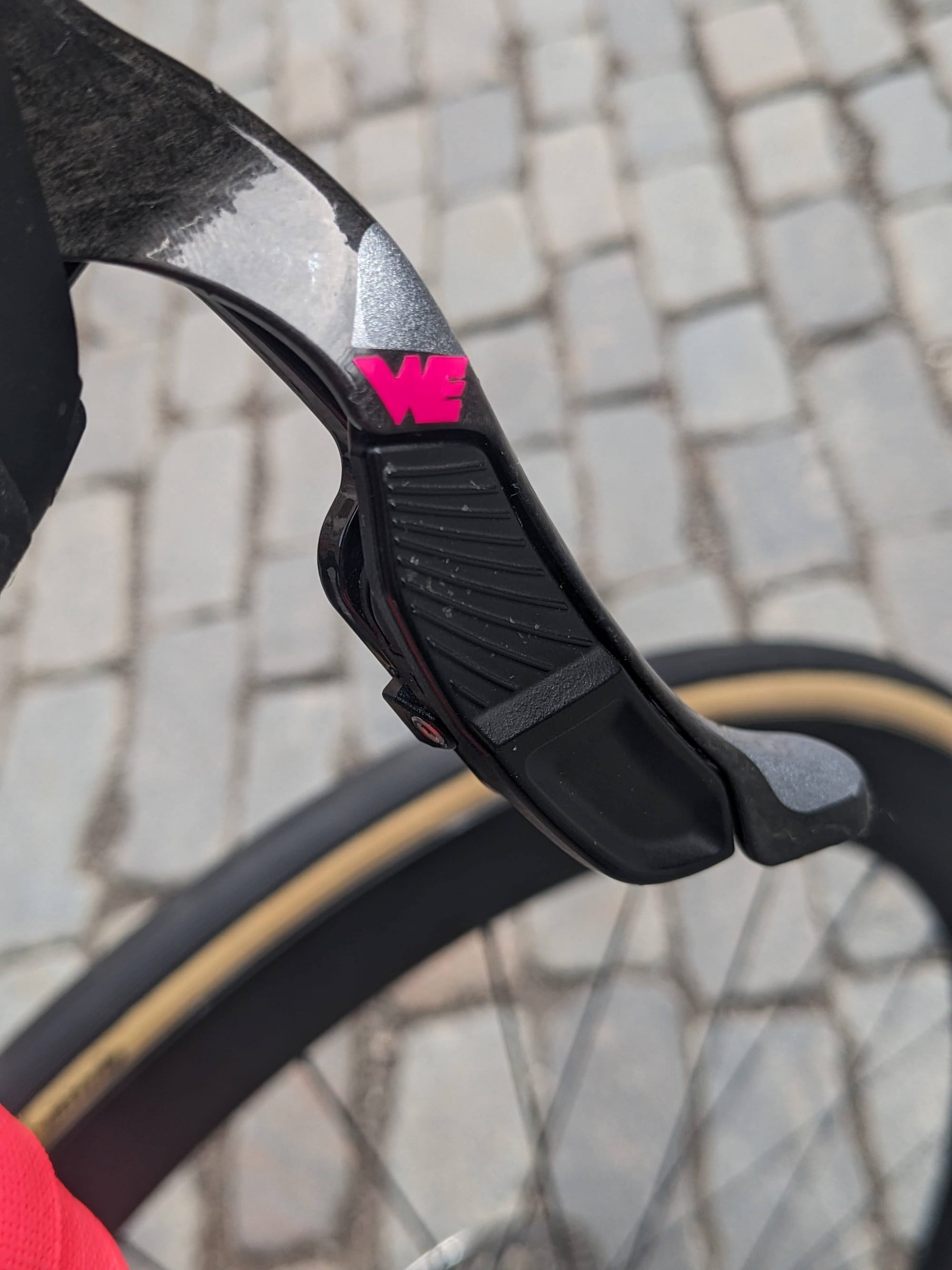
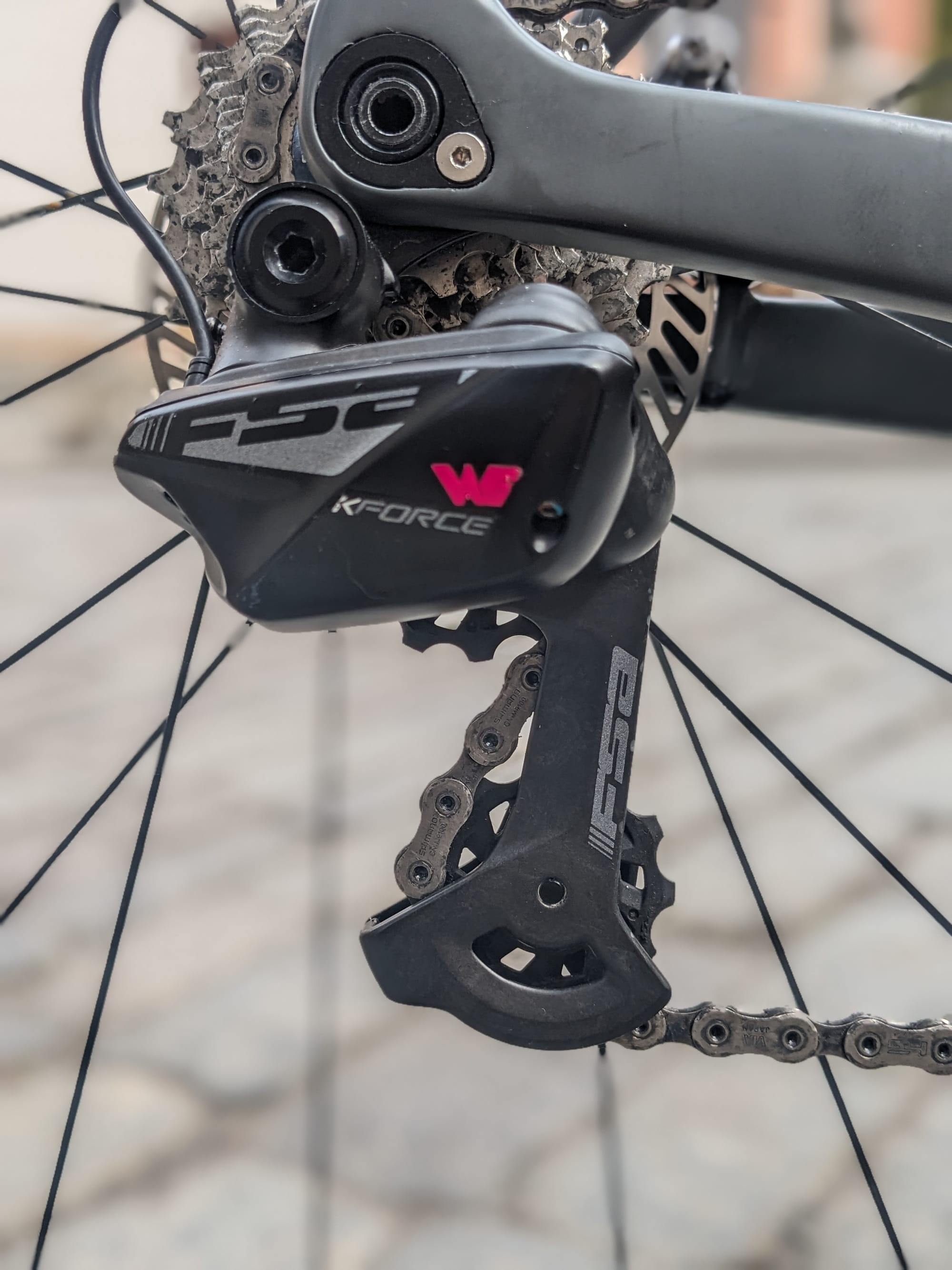
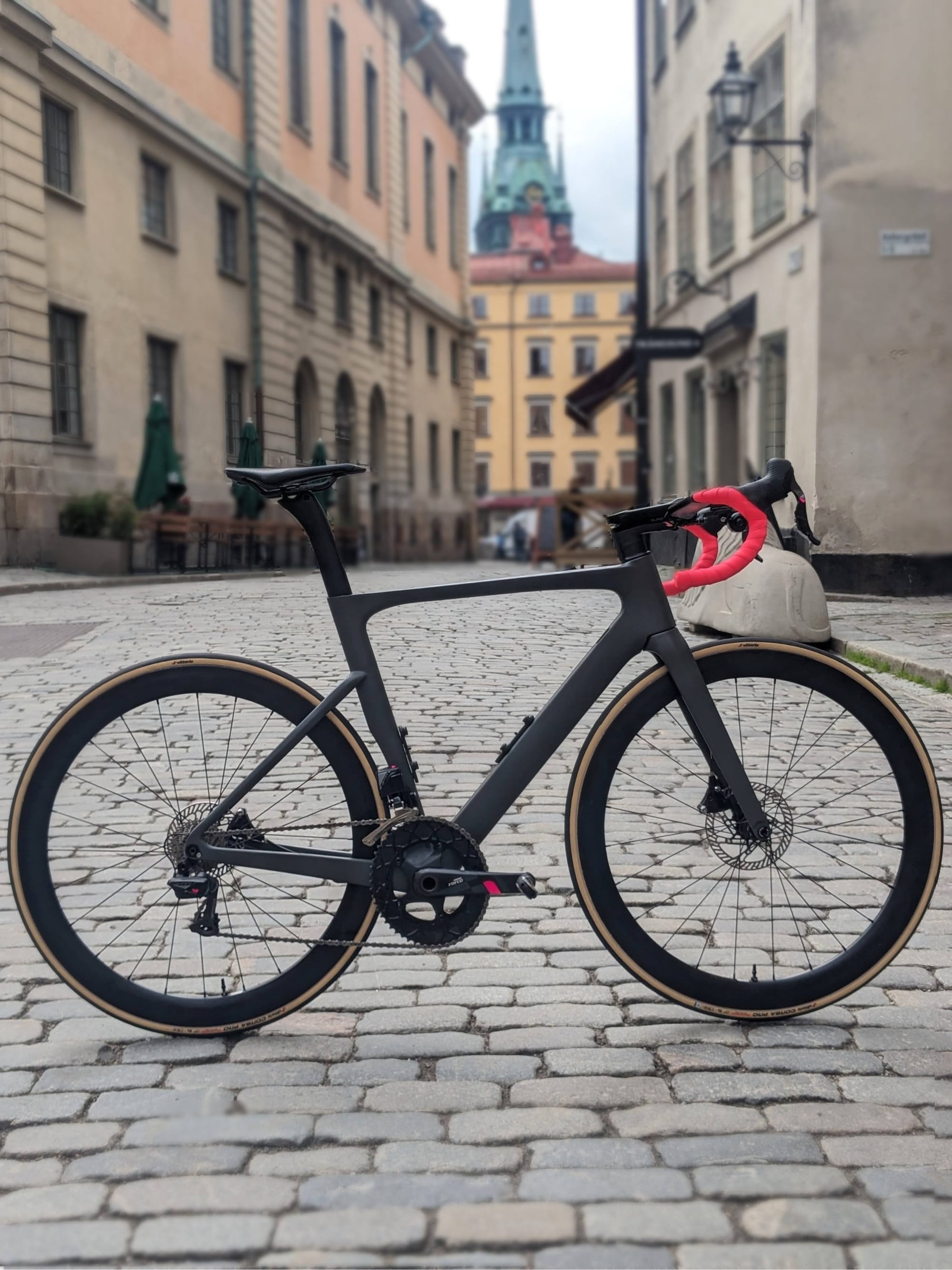
And here's the payoff to the whole thing: the triathlon that started this entire project, the one that had been cancelled since 2020, finally happened. I rode it on a bike that shared almost nothing with the one I'd first set out to build for it. The FSA electronic setup was a genuine help on the day. The race that launched the ship arrived years late, to find the ship completely rebuilt.
Resurrection
Which brings us to now.
In October 2024, while I was sourcing parts for my partner's road bike, I stumbled on a listing for three crash-damaged Dura-Ace Di2 shifters — two Dura-Ace, one Ultegra — for about a thousand kronor. Fresh off a diet of Matt Armstrong videos and possibly overconfident, I thought: nothing to lose. Worst case, I part them out.
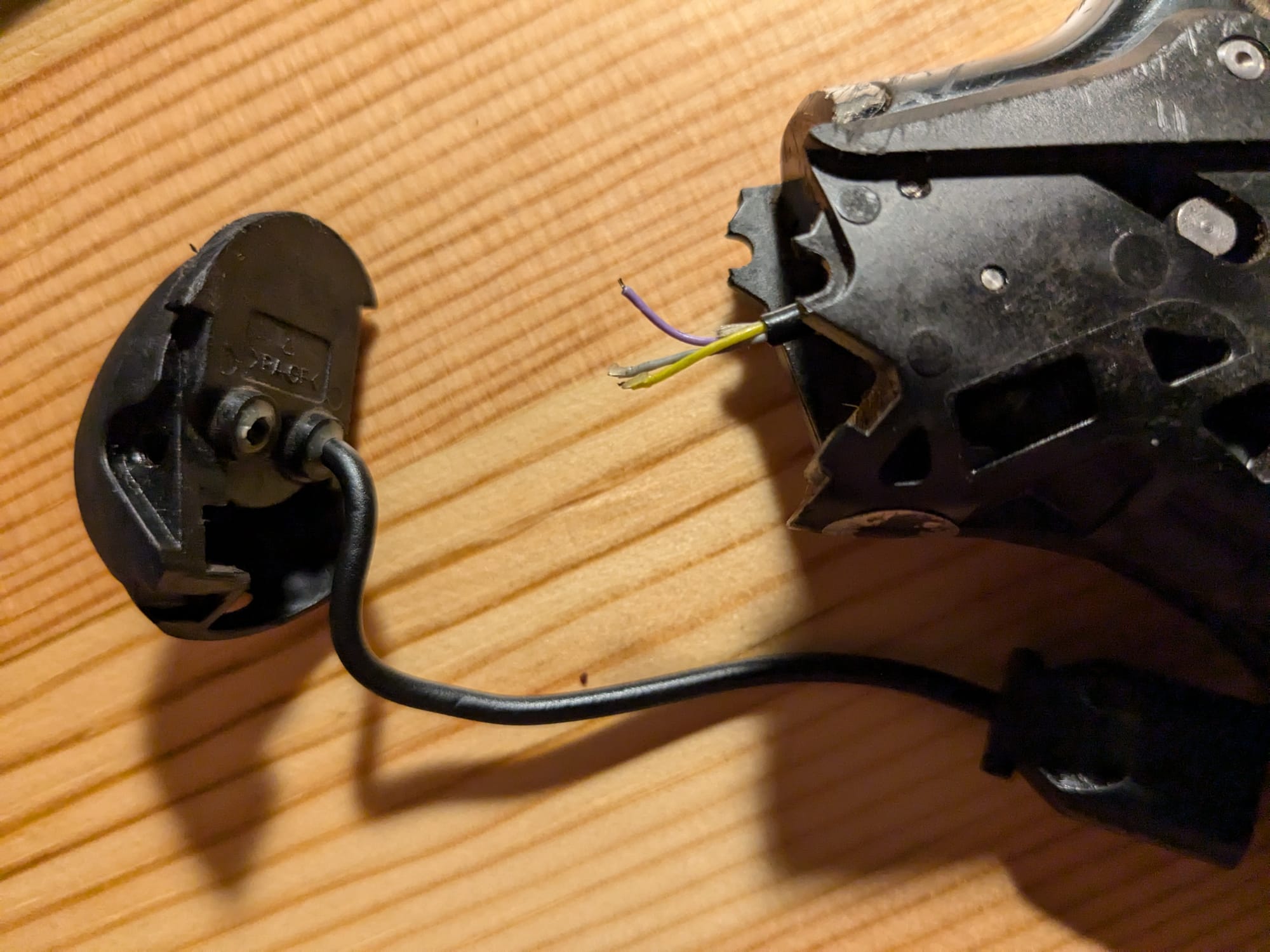
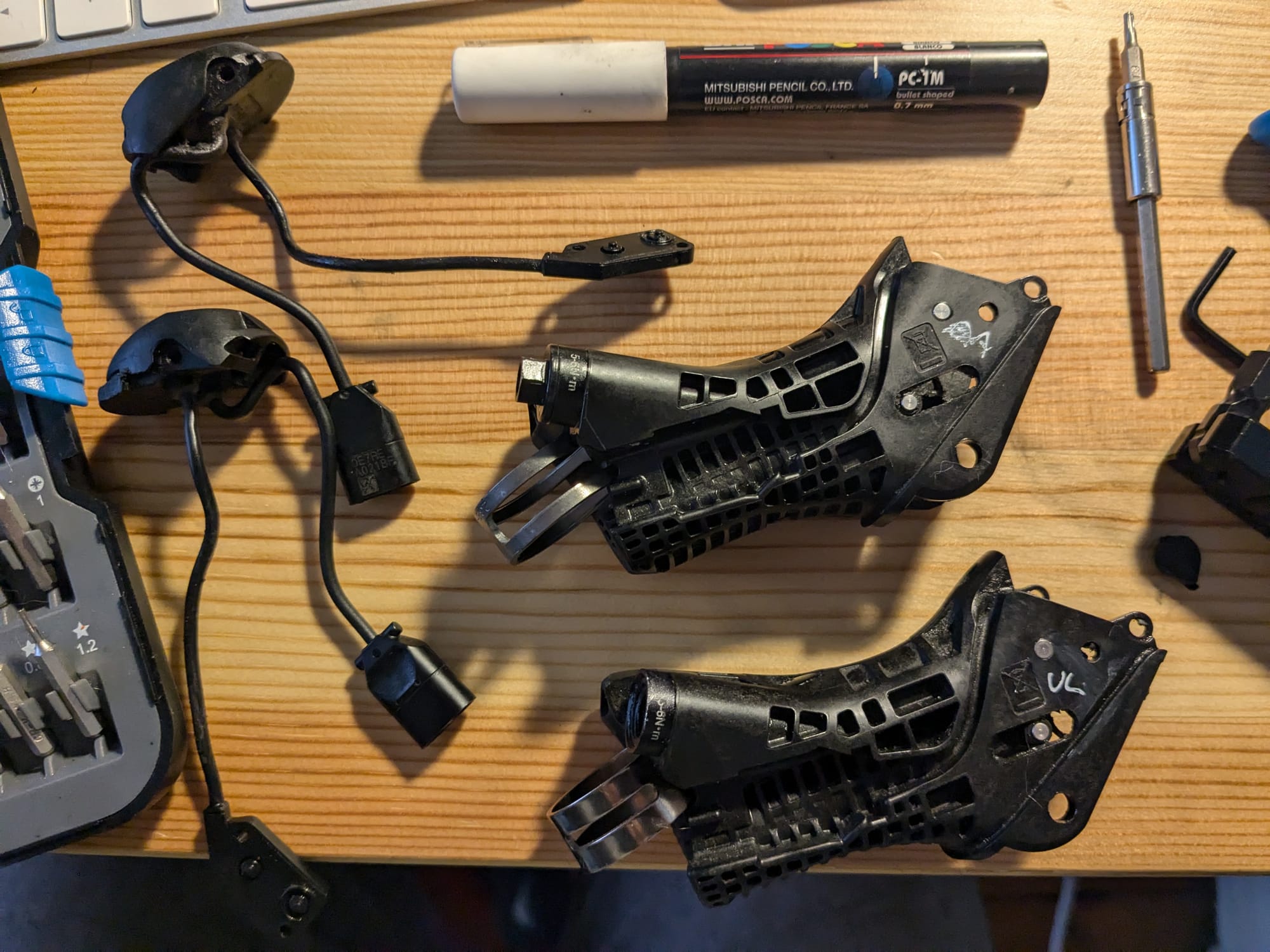
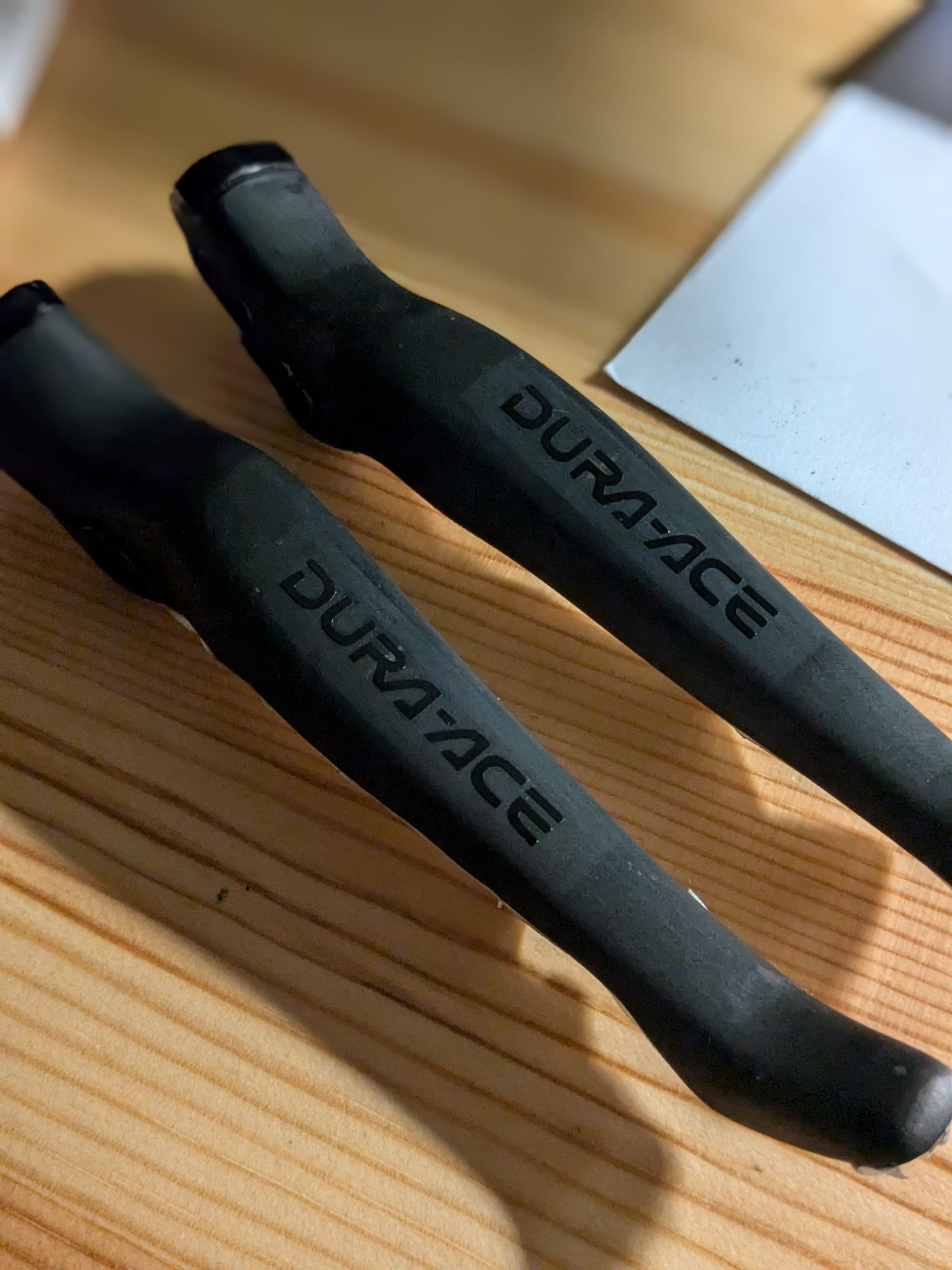
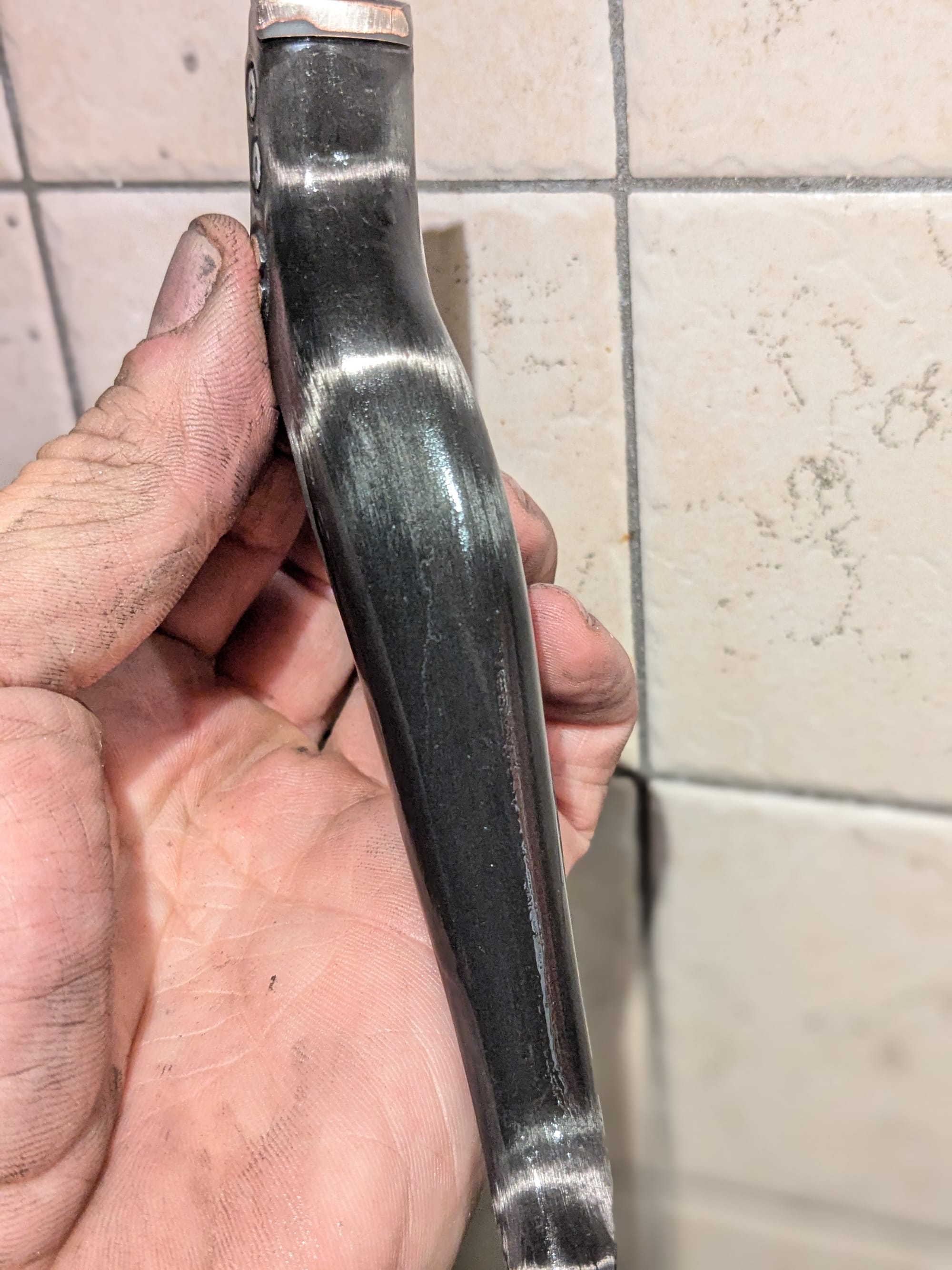
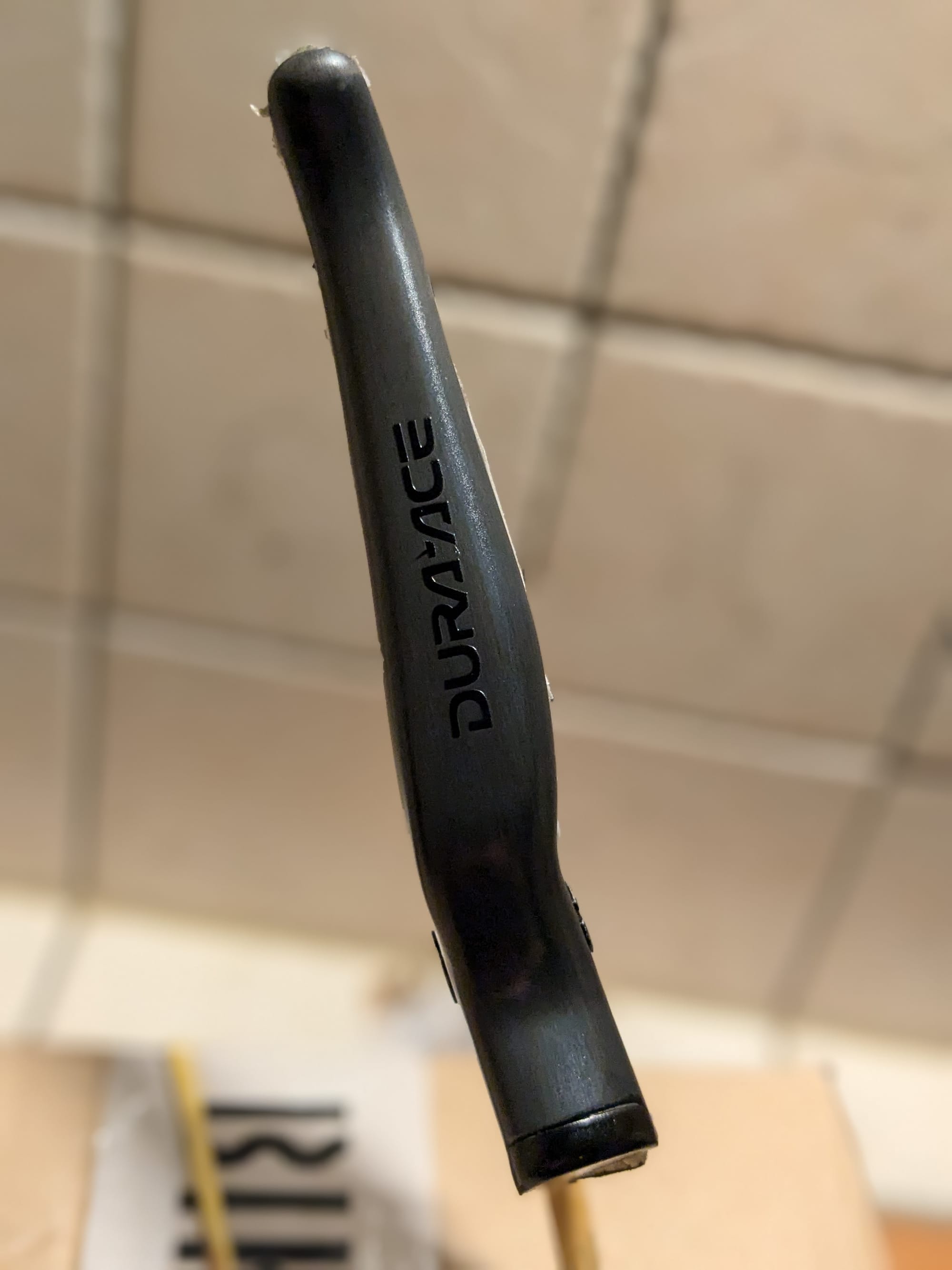
Then I found a YouTube channel devoted almost entirely to resurrecting broken Di2, and I got to work. One shifter had a leaking hydraulic bladder — a known issue, fixable. Another had a shift cable snapped clean out of the head, which I salvaged and soldered back together with a hand from some robotics friends who happened to be in the room. I worked out the cross-compatibility between the parts, and when the dust settled I'd assembled a full Dura-Ace groupset for a third of the price of new — something I'd genuinely never imagined I'd own. I sanded the levers back to bare carbon, applied fresh decals, and clear-coated them myself for a satin finish. Then I fitted it, sold off the FSA parts, and that is where the bike lives today.
Top-tier electronic Dura-Ace, built out of somebody else's write-off, wearing a finish I laid by hand.
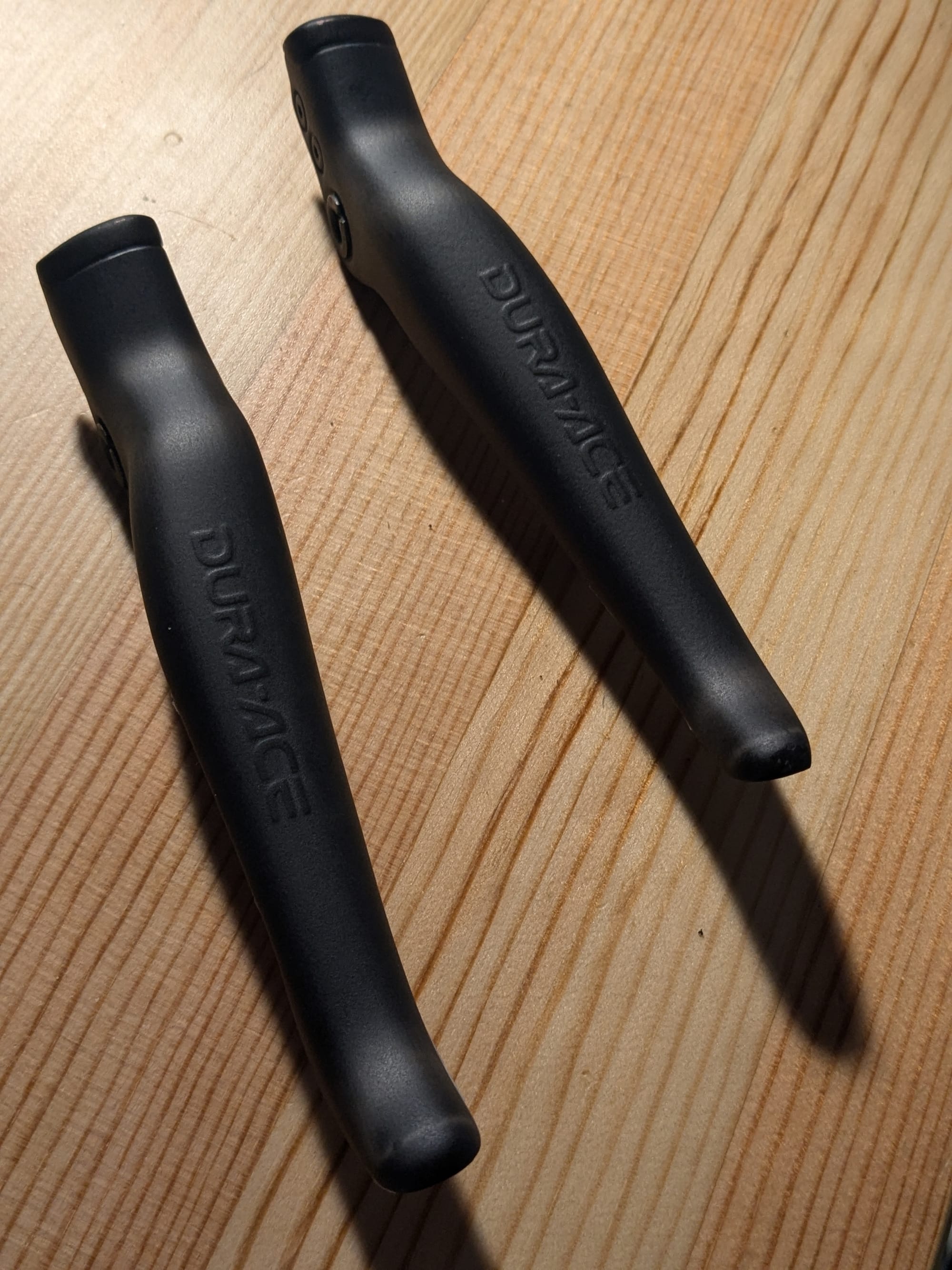
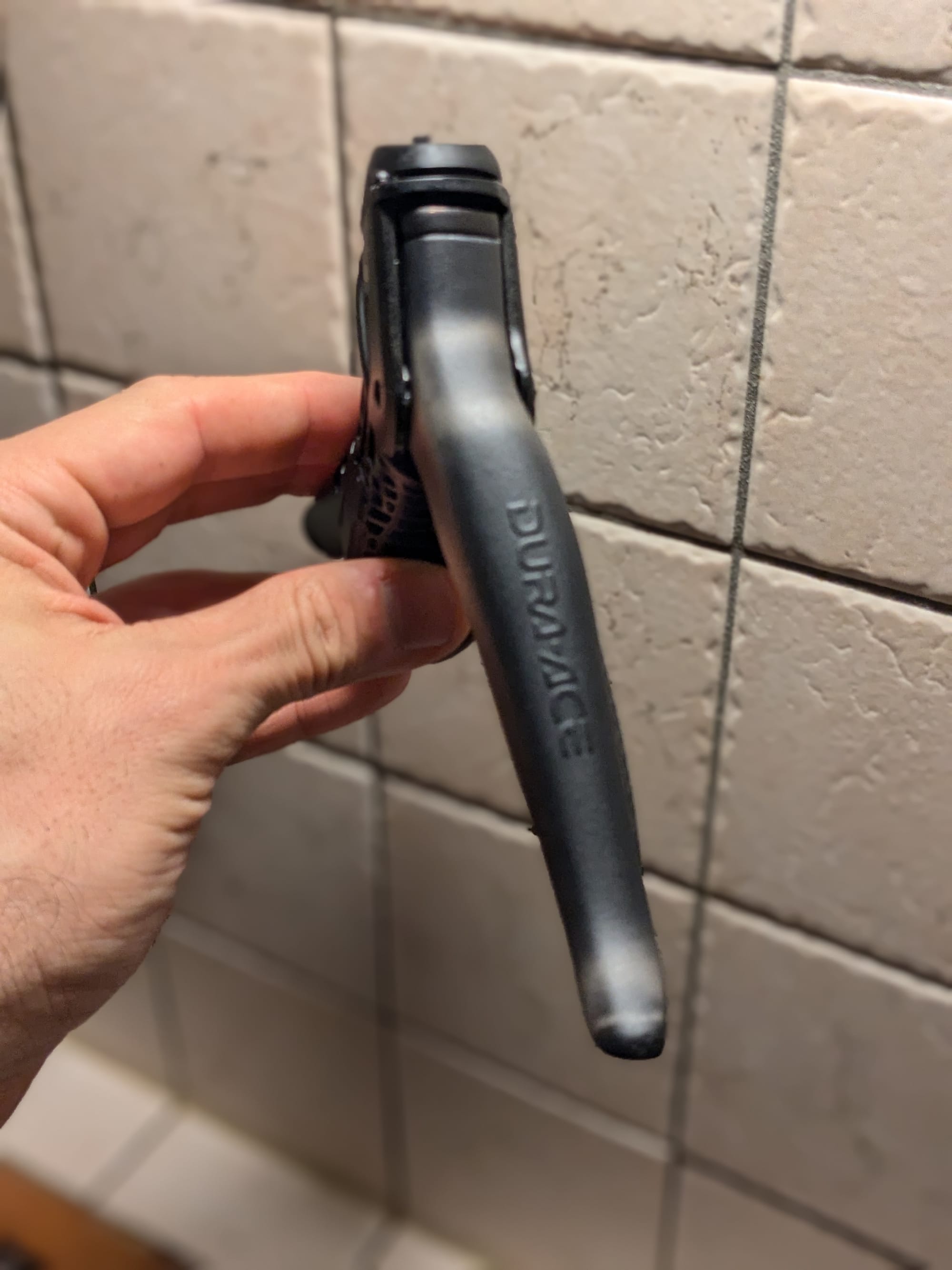
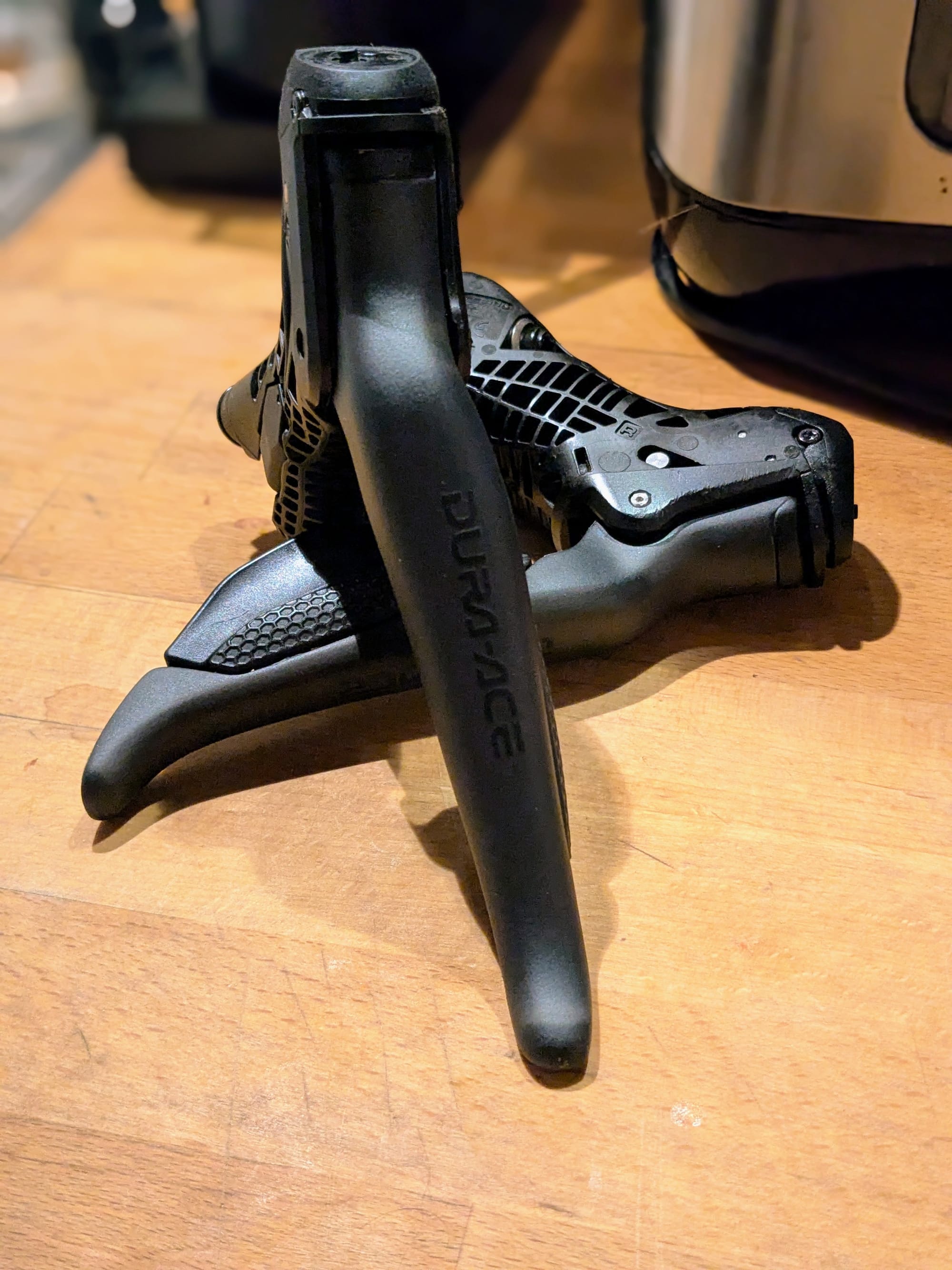
So — is it the same bike?
Nothing survives from the machine I first bolted together in 2020. Not the frame, not the groupset, not the wheels, not the brakes, not the crank, not the paint that flaked off in my hands. If Theseus had asked me, I'd have told him to keep the old planks; I sold most of mine on Blocket or Happyride.se .
But I don't actually think the bike was ever the thing being preserved.
The continuity was never in the parts. It was in me — in the accumulating pile of skills each swap forced me to learn. Indexing gears. Bleeding hydraulics. Setting up tubeless. Routing cables through a closed frame. Soldering a dead shifter back to life. Knowing, finally, when the most skilful decision is to hand the frame to someone who'll paint it better than I ever could. The bike is just the ledger those lessons were written in. Replace every plank you like; the shipwright is the through-line.
Which, if I'm honest, is why this is filed under work in progress and not finished work. I've never finished this bike. I don't think I want to. Every version was the best I could do with what I knew at the time, and every version got torn back to bare carbon the moment I learned enough to do better. That's not a bug in how I build bikes. It's the whole way I build anything.
So: is it the same bike?
No. And that's the point. It's a better one — because I'm a better builder than the person who started it. Ask me again next season, though. I've got my eye on a few parts.
THOUGHT-RELATED STUFF
Keep exploring